
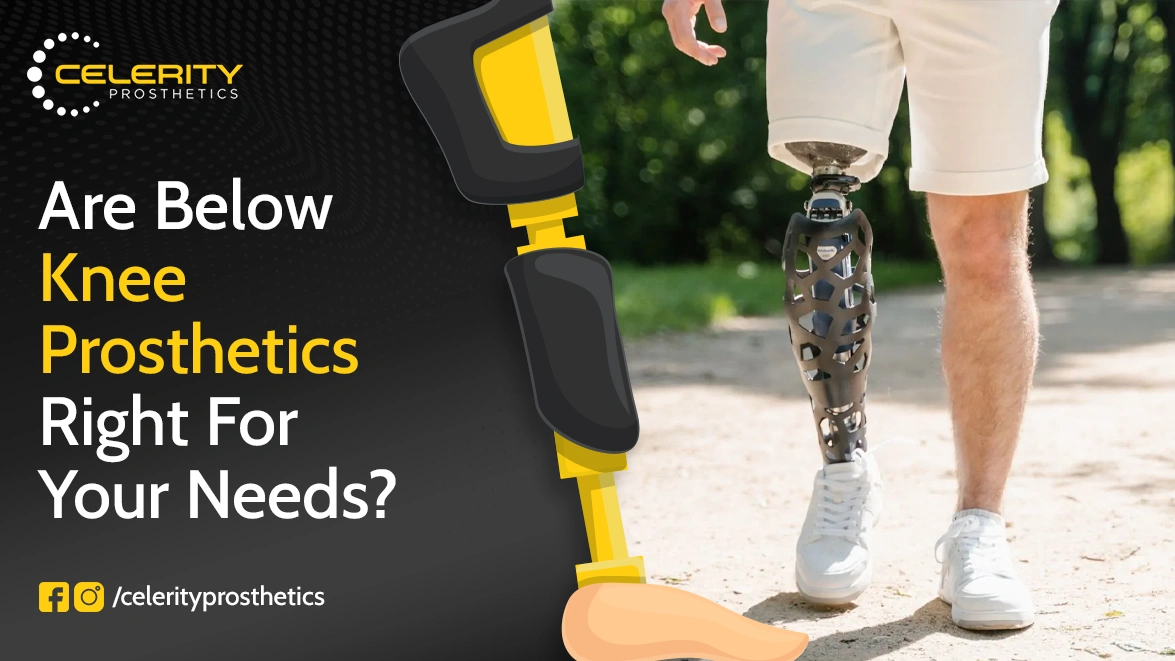
Below-knee prosthetics are artificial limbs that replace a leg missing below the knee. They help you walk, move comfortably, and handle daily tasks with more confidence. There are different types of below-knee prosthetics, and each type is best suited for specific needs and lifestyles.
Some are designed for everyday stability, while others help with active movement or specific activities like sports. These prosthetics vary in cost and lifespan, which matters when deciding what fits your goals and budget. Learning about the types of below-knee prosthetics and understanding what they can do will help you make the right choice for your needs.
Types of Below-Knee Prosthetics and What They Are Best For
Let’s understand the different types of below-knee prosthetics and how each one can support your daily comfort, movement, and goals.
1. Mechanical Feet
Mechanical feet are the most basic type of below knee prosthetic. They use simple parts that allow you to walk and stand with stability. These feet do not have moving parts that adjust to different surfaces, but they are strong and dependable for daily use.
What are they best for:
Mechanical feet are best for people who need a reliable option for everyday walking, especially on flat and smooth surfaces. They are durable and require less maintenance, making them a good choice for those who want a straightforward, budget-friendly prosthetic that can handle daily routines with ease.
2. Dynamic Response Feet
Dynamic response feet are designed to store and release energy as you walk. They bend slightly when you step down and then return to shape as you step off, giving you a smoother, more natural walking motion.
What are they best for:
Dynamic response feet are a good option if you walk longer distances, move at varied speeds, or walk on uneven ground. They can help reduce fatigue by making each step feel lighter and support light recreational activities, like walking in parks or on trails, by allowing you to move comfortably and easily.
3. Microprocessor Feet
Microprocessor feet use small computers and sensors to adjust how the foot responds as you walk. These sensors track your movement and the surface you are on, allowing the foot to adjust in real time for a smoother and safer walking experience.
What are they best for:
Microprocessor feet are best for active users who walk on different types of terrain, including slopes and uneven ground. They provide extra stability and help you feel more confident throughout your day. They offer smoother steps and reduce the risk of falls by constantly adjusting to your movements as you walk.
4. Specialty Feet
Specialty feet include options like waterproof feet, shock-absorbing feet, and sports-specific prosthetic feet. These are designed for specific activities and needs, providing targeted support where you need it most.
What are they best for:
Specialty feet are ideal for hobbies or work requiring unique support. For example, waterproof feet help with swimming or showering, while sports feet can help with running or hiking. If you want to continue enjoying certain activities, specialty feet can offer the flexibility and confidence you need.
Lifespan of Below-Knee Prosthetics
Below-knee prosthetics typically last between 3 and 5 years, depending on your activity level and how well you care for them. However, the foot shell, liners, and sleeves may need to be replaced sooner, especially if you are active or use your prosthetic in different environments.
Factors like changes in body weight, daily wear, and how often you walk can affect the lifespan of your prosthetic. Regular checkups with your prosthetist can help identify when parts need repairs or adjustments to keep your prosthetic working comfortably and safely.
How to Choose the Right Below-Knee Prosthetic
Choosing the right below-knee prosthetic depends on your lifestyle and goals. Here are a few things to consider:
- Activity Level: Consider how much you walk, the surfaces you walk on, and whether you plan to do activities like hiking or sports.
- Comfort and Fit: Your prosthetic should fit well and feel comfortable during daily movements.
- Budget and Insurance: The cost can vary depending on your chosen type, so it’s important to check with your insurance and plan your budget.
- Environment: Consider if you need a prosthetic for wet conditions, uneven terrain, or specific work tasks.
- Work with Your Prosthetist: Testing different types and making adjustments with your prosthetist can help you find the best option for your needs.
Questions you can ask your prosthetist include:
- Which type of prosthetic will fit my daily activities?
- How will it feel during different tasks?
- What kind of support will I need as I adjust to using it?
Conclusion
Below-knee prosthetics can greatly improve your ability to walk, move, and handle daily activities with comfort and confidence. Different types of below-knee prosthetics are available, including mechanical feet, dynamic response feet, microprocessor feet, and specialty feet, each designed to match specific needs and lifestyles.
Considering factors like cost, lifespan, and daily activities can help you make the best choice for your comfort and independence. At Celerity Prosthetics, we help you find a below-knee prosthetic that fits your goals and supports your daily life. Contact us today to take your next step with confidence and ease.