
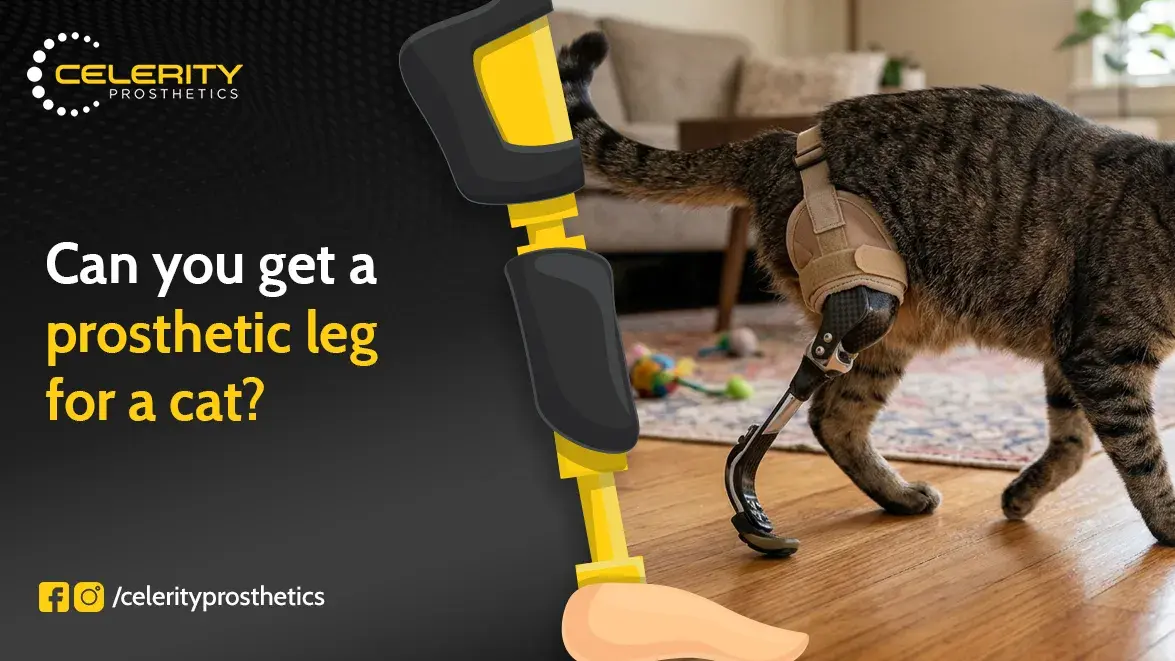
Yes, but only for some cats. Most cats do well on three legs and never need a prosthesis. A prosthetic leg becomes an option when a cat has enough healthy limb left to carry one, and the owner can handle the cost and the follow-up. Two types exist. An external prosthesis fits over the remaining limb. An implant anchors into the bone. Both are rare and need a specialist. Your cat’s age, health, and temperament matter too. Here is how candidacy and cost work so you can decide if a prosthetic leg for cats fits your pet.
Key Takeaways
- Ask your vet about life on three legs first. Most cats adapt well without a prosthesis.
- Expect a prosthesis to need a healthy partial limb. Cats with no limb left rarely qualify.
- Book an exam with a veterinary surgeon or orthopedic specialist before you spend anything.
- Budget hundreds to thousands of dollars for the device alone. Surgery and follow-up cost extra.
- Skip DIY and cheap online devices. A poor fit can cause sores and change how your cat walks.
In What Situations Can a Cat Get a Prosthetic Leg?
A vet may consider one when a cat has lost part of a leg and has healthy tissue left.
Congenital Limb Defects
Some kittens are born with a short or missing lower leg. In one 2005 case, a cat born without the lower half of his hind legs received an implanted prosthesis at a veterinary school. Growth makes timing hard. Kittens can outgrow a prosthesis fast. A vet will weigh the benefit against the cost of repeat fittings.
Severe Leg Injuries
Car strikes and machinery can destroy a lower leg. If surgeons must remove the damaged part but can keep the upper limb, a prosthesis may be possible. Most cats still go with full amputation and do very well. A surgeon looks at the whole picture first. That includes the injury, cat’s age, and any other health problems.
Limb Loss From Disease
Bone cancer and deep infection can force surgery. Cancer and radiation can also weaken bone. Specialists have used a custom implant to save a cat’s leg after bone cancer. Cases like this need a team that includes an oncologist.
Partial Limb Amputation
A prosthesis needs a stump to attach to. A veterinary journal notes that a partial limb amputation must be performed for a pet to be a candidate. If the whole leg is gone at the shoulder or hip, the options are very few. Ask the surgeon how much limb can be kept. A small difference in length can change the answer.
Suitable Bone and Tissue Health
Weak bone cannot hold an implant. Thin or scarred skin rubs under an external socket. A surgeon checks both with an exam and X-rays.
What Determines Whether a Cat Can Use a Prosthetic Leg?
Four things decide it.
Location and Extent of the Limb Loss
Losses lower on the leg work best. Community advice says a cat needs a lot of leg left below the elbow or knee for a device to work well. The more limb you keep, the more leverage the cat has.
Bone, Skin, and Tissue Health
Surgeons look at bone strength, skin quality, and blood flow. Cats can be picky about things on their legs. One orthopedic surgeon said a sleeve over the stump can cause pain and skin irritation. That is a big reason implants were explored.
The Cat’s Age, Size, and Activity Level
Kittens outgrow devices. Small bodies leave little room for hardware. An indoor cat that jumps and climbs needs a device that can take it. Senior cats may not handle surgery well.
Overall Health and Ability to Adapt
Kidney or heart disease raises anesthesia risk. A cat also has to tolerate wearing the device and doing therapy. Many cats cope well without one. Cats on three legs also face a higher risk of arthritis and joint problems. Vets advise keeping three-legged cats lean and not letting them roam outdoors unobserved.
How Does a Prosthetic Leg for a Cat Work?
It replaces the missing part of the leg and lets the cat bear weight.
Custom Design and Fitting
A specialist measures the limb and builds a custom device. External types use a socket and a suspension such as a liner or strap. Implant types use a post anchored in the bone with a paw attached outside. This process is called osseointegration. A published case report describes implants in both hind legs of a cat.
The Adjustment and Training Period
Cats need time. Expect rest after surgery and then short wear sessions. In the best-known case the cat needed rehabilitation training to learn to walk again. Start with short sessions at home. Reward your cat for wearing it. Stop and call your vet if your cat limps or chews at the device.
Cleaning, Monitoring, and Follow-Up Care
Check the skin every day for redness and sores. Clean the device and the contact area as the vet directs. With an implant, the skin seal around the post matters because it helps prevent infection. Weight changes can affect fit. Report limping or swelling fast.
How Much Does a Prosthetic Leg for a Cat Cost?
Prices vary widely. A simple external device costs far less than a custom implant plus surgery.
Type and Design of the Prosthesis
One 2026 pet insurance guide lists $800 to $3,500 for a pet prosthetic device, depending on complexity. Implants cost more. In the best-known cat case, the paws alone cost about £2,000 or roughly $3,000 to make, and the surgery was extra. That case dates to 2009, so ask for a current quote.
Materials and Manufacturing Costs
Titanium and carbon fiber cost more than plastics. A cat’s device is small and they are made one at a time, which adds to the labor cost. Ask the maker which materials are in the quote and how long they last.
Custom Fitting and Measurements
Measuring, molding, and test fits take several visits. Each visit can carry a fee. Ask whether the quote includes a re-fit if the first one does not work.
Veterinary Exams and Imaging
X-rays and sometimes CT scans show bone health. Bloodwork checks that anesthesia is safe. A specialist consult adds its own fee. Get these costs in writing before you commit.
Follow-Up Visits and Adjustments
Re-fits and checks continue as the limb changes. A growing kitten may need a new device. Ask for a written quote that answers these questions:
- Does the price include surgery or only the device?
- How many fittings are covered?
- What does a re-fit cost?
- How long should the device last?
Ask your pet insurer whether prosthetics are covered and whether the injury counts as pre-existing.
Conclusion
Some cats can get a prosthetic leg, but most don’t need one. Candidates need a healthy limb, good bone and skin, and a calm temperament. Start with your vet and ask for a referral to a surgeon. Get a written quote that lists the device, the surgery, and the follow-up. Compare it with the plain path of amputation and a three-legged life.
If you want help thinking through your options, talk to Celerity Prosthetics. Our team can walk you through fitting and follow-up care. Call us today to talk about whether a prosthetic leg for cats could work for your pet.