
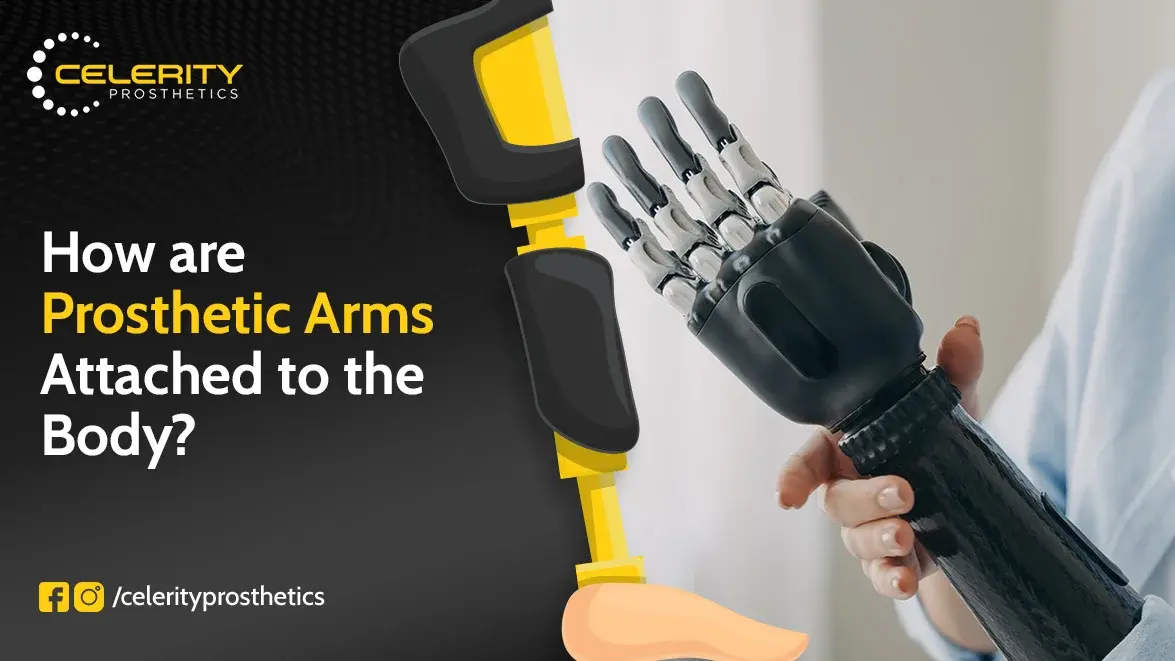
Losing a limb is a huge life change, but modern tools make it much easier to get back to your old routine. One of the biggest questions new users have is how prosthetic arms are attached to the body during a busy day. But it isn’t just about “strapping on” an arm; it is about finding a fit that feels steady and comfortable.
To find a setup that feels like a real part of you, you first need to explore custom sockets for a base. Then, you can look into straps and harnesses or the smooth seal of suction and vacuum systems. Some prefer the click of a locking pin, while others choose the direct bond of osseointegration. Understanding these choices is the key to learning how prosthetic arms are attached to the body so you can pick a device that stays exactly where it belongs while you carry groceries or wave hello.
Ways Upper Limb Prosthetics Are Attached to the Body
Every person has a different shape and different goals, so there is no single “best” way to wear a prosthetic arm. The main goal is to keep the device from sliding or twisting while you move.
Custom Sockets
The most common method is a custom-made socket. This is a hard or semi-soft cup that is shaped exactly like the end of your arm. It uses your natural curves, like your elbow or shoulder bones, to “grab” on and stay put. A good socket should feel snug, almost like a firm handshake, but it should never pinch your skin or cause pain.
Straps and Harnesses
Harnesses are a classic choice that many people find very reliable. These systems use soft fabric straps that go over your shoulders and across your chest. They are great for holding the arm on tightly, especially if you are doing heavy work. Some designs even use your back movements to pull cables that open and close the prosthetic hand.
Suction and Vacuum
If you want a clean look without extra straps, a prosthetic clinic may recommend this. You slide your arm into the socket, and a small valve pushes the air out. This creates a vacuum seal that keeps the arm firmly stuck to your skin. It provides a very “connected” feeling, so when you move your shoulder, the arm follows right along without any delay.
The Locking Pin
Some people like the security of a mechanical lock. For this, you wear a soft, gel-like liner over your limb that has a small metal pin at the bottom. When you slide into the socket, the pin clicks into a lock. It stays there until you press the release button. It gives you great peace of mind because you know the arm cannot budge until you want it to.
Osseointegration (Bone Connection)
This is the most advanced method used today. Instead of a cup sitting on your skin, a doctor surgically places a small metal post into your bone. The prosthetic arm then clicks directly onto that post. This removes the need for a socket entirely, which stops skin rubbing and lets you feel vibrations through your bone, almost like a sense of touch.
Conclusion
Getting back to your life is all about picking a connection that fits your daily habits. When people ask how prosthetic arms are attached to the body, the answer usually starts with a custom socket designed to grip your natural shape. From there, you might add straps and harnesses for extra strength or use suction and vacuum for a sleeker profile.
If you want a mechanical hold, a locking pin is a great addition, while osseointegration offers the most direct bond possible. Most people find that the right mix of these tools makes the gear feel less like a tool and more like a part of the body.
Feel free to reach out to the experts at Celerity Prosthetics if you need help navigating these choices regarding prosthetics in Oklahoma City.
FAQs
Can a prosthetic arm fall off while I am walking?
No, modern systems like suction and locking pins are very strong. They are built to stay on even if you are moving fast or carrying something heavy.
Will the straps from a harness hurt my skin?
When a harness is fitted correctly, it should feel comfortable. If it feels like it is digging into your skin, you just need a quick adjustment from your prosthetist.
Is surgery the only way to get a secure fit?
Not at all. Most people use non-surgical methods like sockets and liners. Surgery is an advanced option for those who have trouble with traditional fits.