
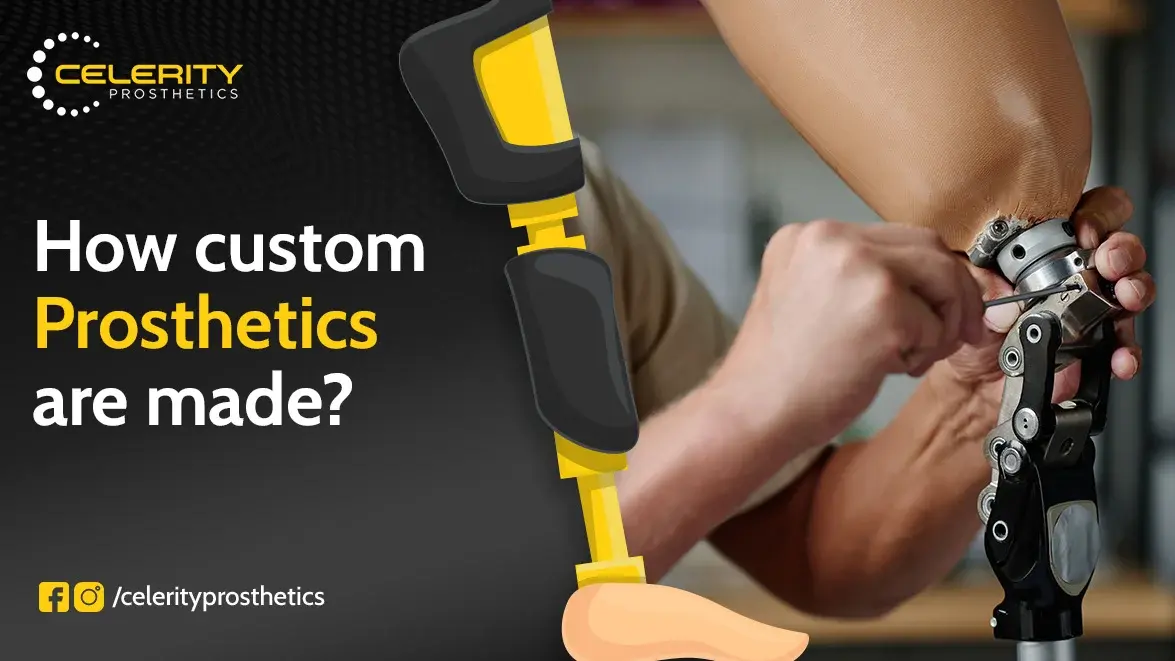
Custom prosthetics are medical devices created to replace a missing limb and help a person move with confidence. These devices are not standard products that fit everyone. Each prosthetic is built for one individual after careful study of their body and daily needs. The process involves doctors, prosthetists, and skilled technicians who work together to design a safe and useful device. Modern tools such as digital scanners and advanced materials have improved accuracy. The prosthetic is made by undergoing processes like clinical evaluation and accurate measurements of residual limbs, material selection, prototype, and casting the socket. Understanding how these devices are made helps patients know what to expect and why every step matters.
Process of Manufacturing Custom Prosthetics
Below are the common processes of manufacturing a prosthetic:
Clinical Evaluation
The process begins with a full medical evaluation. The specialist checks the health of the residual limb, skin condition, and muscle strength. They also ask about the patient’s daily routine. Do they walk long hours or mostly stay indoors? These answers guide the design. The professional notes pain points, movement limits, and personal goals. This stage builds the foundation for everything that follows.
Measuring the Residual Limb
The precise measurement process determines the accuracy of prosthetic fitting. The smallest measurement mistake will result in future discomfort. The patient undergoes multiple limb measurements, which are taken during sitting and standing positions.
Here are the key measurement factors
When fitting a prosthetic, several factors matter. Circumference ensures the socket fits snugly. Limb length sets the prosthetic’s height. Bone landmarks help with proper alignment. Skin condition is checked to avoid pressure sores and irritation.
Digital Scanning
Many clinics now use digital scanners instead of the old plaster methods. The scanner creates a 3D model of the limb in minutes. This model shows curves and sensitive areas clearly. The data goes directly into design software. It reduces guesswork and saves time. Patients usually find this step comfortable and quick.
Design Planning
After measurements, the prosthetist plans the structure of the device. They decide the type of socket, joint, and foot component or upper limb prosthetic for the hand. The plan must match the patient’s weight and activity level. A worker who stands all day needs a different design than a student. Every detail is discussed before moving ahead.
Material Selection
Different materials change the feel and strength of a prosthetic. The team chooses them based on comfort and durability.
Prosthetics are made from a variety of materials, each serving a specific purpose. Carbon fiber is used for lightweight yet strong frames, providing durability without adding bulk. Silicone is commonly applied as soft liners to protect the skin and improve comfort. Plastic resin is shaped into sockets that fit the residual limb precisely. Titanium is often used for joints and connectors due to its strength and corrosion resistance, ensuring smooth and reliable movement.
Prototype Creation
A first model is made to test the basic shape. This version is not final. It helps the team see how the limb sits inside the socket. Adjustments are easy at this stage. Think of it as a rough draft before the real device.
Casting the Socket
The socket is the part that holds the limb. It must fit perfectly. Technicians shape the socket using the scan or mold. They smooth the inner surface to avoid friction. A well-cast socket spreads body weight evenly and prevents pressure spots.
Socket Fit Testing
The patient tries the temporary socket in the clinic. They stand and take a few steps with support. The prosthetist watches balance and posture. If something feels tight or loose, changes are marked immediately. This step may be repeated more than once.
Checking the Prosthetic’s Fit
Fit checking focuses on comfort and movement. They’ll start by checking that the limb does not rub against hard edges. The patient must stand without leaning to one side while wearing the prosthetics. The color of the skin should remain normal after use, so there will be a check for redness or bruising. Walking should feel stable on flat ground and sitting should not create pressure marks.
Final Fabrication
After all corrections, the final device is built. Stronger materials replace the test parts. Components are aligned to match natural body movement. The look of the prosthetic can also be customized. Some patients choose a natural appearance. Others prefer a sporty style.
Quality Testing
Before delivery, the prosthetic goes through several checks.
Before delivery, a prosthetic undergoes several quality tests to ensure it functions safely and effectively. Load tests confirm that the device can withstand the user’s body weight, ensuring strength and durability. Alignment tests check that the prosthetic supports proper posture and fits correctly with the body. Motion tests verify that the joints move smoothly, allowing natural and comfortable movement for daily activities. Together, these checks guarantee the prosthetic is reliable and ready for use.
Patient Training
The process of receiving a prosthetic device extends beyond the final fabrication and quality testing. The patient will learn how to safely use the device. The therapists provide instruction, such as how to stand, walk, and climb stairs. They demonstrate proper device cleaning methods and skin protection techniques. Small habits make a big difference. Proper liner application prevents skin irritation. Training usually continues for a few weeks until confidence grows.
Conclusion
The prosthetic is created through a careful and organized process that focuses on the needs of one person at a time. Every stage, from evaluation to final testing, has a clear purpose. Accurate measurements protect the limb and improve comfort. Thoughtful material choices add strength without extra weight. Repeated fittings allow the patient to speak about problems before the device is completed. Technology has made design faster and more precise, but professional skill still guides each decision. A well-made prosthetic supports movement, reduces pain, and helps people return to work and daily life. When patients understand this process, they can take an active role and achieve better results.
For more prosthetic service, reach out to Celerity Prosthetics.
FAQs
How long does it take to make custom prosthetics?
It usually takes a few weeks, depending on fittings, adjustments, and the type of prosthetic required.
What is the process of making custom prosthetics?
The process includes evaluation, measuring the limb, digital scanning, design planning, material selection, socket creation, testing, and patient training.