
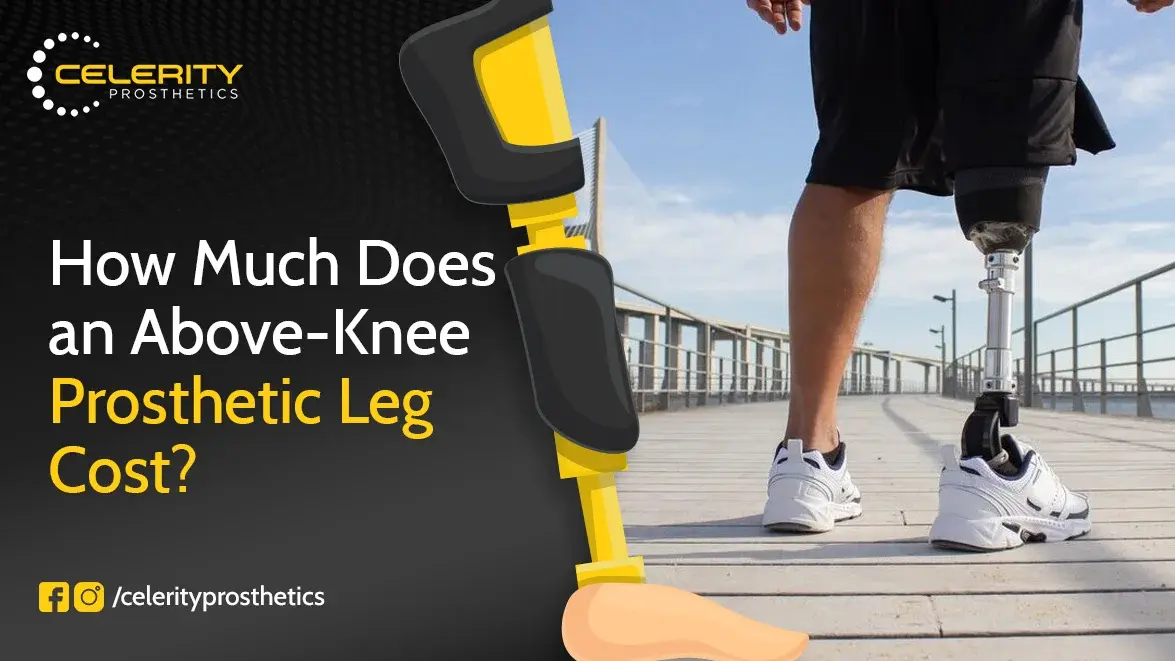
An above-knee prosthetic leg can cost anywhere from $5,000 to $100,000+ without insurance. However, the price can greatly vary based on the type of prosthesis. A basic setup costs less than one with an advanced knee joint. Insurance coverage also affects what you may actually pay.
The fitting process adds to the total too. You may need several appointments before the prosthesis feels right. So there isn’t one fixed price for an above-knee prosthetic leg. Your needs, the components you choose, and your insurance all impact the final bill.
Core Takeaways
- An above-knee prosthetic can cost roughly $5,000 to over $70,000.
- The knee joint is one of the biggest factors affecting the price.
- Insurance may cover part of the cost, depending on your plan.
- Basic components usually cost less than advanced electronic systems.
- Fitting and adjustments, as well as follow up care, can add to the total.
- Choosing the right leg prosthetic depends on different factors, including comfort, mobility, and daily needs.
Average Cost of an Above-Knee Prosthetic Leg
There isn’t a standard price for every above-knee prosthesis. A basic prosthetic may cost several thousand dollars. More advanced systems can cost tens of thousands. Some may go beyond $70,000 once the components and related care are included.
An above-knee prosthesis is more complicated than one for an amputation below the knee. That’s because it needs an artificial knee joint.
The knee is doing a lot of work. It has to bend while you sit. It needs to stay stable while you stand. It also needs to move properly as you walk.
A basic mechanical knee may keep the price lower. A computerized knee can cost much more. The socket matters too. That’s the part that fits around the residual limb. If the socket doesn’t fit properly, walking can become uncomfortable very quickly.
Your prosthetist may need to make changes over time. Your residual limb can also change in size and shape especially during the first months after amputation.
What Makes an Above-Knee Prosthetic More Expensive?
Several parts can affect the final price. The knee is one of the biggest ones. But it isn’t the only factor.
The Prosthetic Knee
There are different types of prosthetic knees. Some use simple mechanical systems. Others have hydraulic or pneumatic features. More advanced knees may use sensors and computer-controlled resistance.
A basic mechanical knee can be enough for some people. Someone who wants to walk at different speeds or handle more demanding activities may need something more advanced. Naturally, the price changes with the technology.
The Socket
The socket needs to fit your residual limb closely. It shouldn’t feel loose. It also shouldn’t put painful pressure on one area. A custom socket is made around your body. Your prosthetist may need to adjust it more than once. That work is part of the overall cost of getting a usable prosthesis.
Foot and Other Components
The prosthetic foot can also affect the price. Different feet are designed for different activity levels. Some are fairly simple. Others are built to provide more movement or energy return during walking. The materials matter as well. Carbon fiber and other specialized materials may cost more than basic options. The cosmetic finish can affect the price too, although appearance isn’t the main concern for everyone.
Does Insurance Cover an Above-Knee Prosthetic?
Insurance may cover some or all of the cost, but coverage depends on the policy. Medicare, Medicaid and private insurance plans can have different rules. Some plans require prior authorization. Others may have deductibles, copayments, or limits on certain components. Your medical provider may also need to document why a particular prosthesis is medically necessary.
It’s worth checking your coverage before ordering anything. Ask your insurance company what it covers for an above-knee prosthesis. Find out whether your prosthetist is in network. Also ask about deductibles and your expected out-of-pocket amount.
The listed price of a prosthesis isn’t always the amount you will personally pay. For example, a prosthesis could have a high total cost but leave you with a much smaller bill after insurance. Another person with different coverage could have a very different experience.
What Does the Prosthetic Fitting Process Cost?
The prosthesis itself isn’t the only expense. You also have the fitting process. First, your prosthetist evaluates your residual limb and talks with you about your daily activities. They may ask about your work, walking habits, and the types of places you normally move around in.
Then comes the socket. A temporary socket may be used while your limb changes. Once the fit is more stable, a more permanent socket can be made. It can take time to get the fit right.
You might notice pressure in one spot. Maybe the socket feels too loose after a few hours. Maybe walking feels different from one day to the next. Those issues aren’t unusual during the adjustment period. Follow-up visits may be needed. Small changes to the socket can make a noticeable difference.
How Much Does an Advanced Prosthetic Knee Cost?
Advanced knees can raise the price considerably. A computerized knee uses sensors and electronics to respond to movement. Depending on the model, it may adjust resistance as you walk or change speed.
That can make walking feel more natural for some users. It can also make the prosthesis much more expensive. Some advanced knees cost tens of thousands of dollars on their own. The full prosthesis costs more because you still need the socket, foot, and other components. But that doesn’t mean a high-tech knee is the right choice for everyone.
Are There Other Costs After Getting a Prosthetic Leg?
Getting a prosthetic leg does not always mean the costs end after the initial purchase.
Repairs and Replacement Parts
A prosthesis isn’t usually a one-time purchase that lasts forever. Parts can wear out with regular use. Sockets may need adjustments or replacement as your body changes. You may also need repairs or new components later.
Replacement Needs for Children
Children and teenagers may need replacements more often because they’re still growing. A prosthesis that fits well now may not fit the same way later.
Changes to the Socket
Adults can also need a new socket if the shape or size of their residual limb changes. Even a small change can affect comfort and how well the prosthesis works.
Physical Therapy and Training
There can also be costs for learning to use the prosthesis. After an above-knee amputation, walking with a prosthesis takes practice. Physical therapy may be part of the process. You may start with balance and standing. Then you can work on shifting your weight and taking steps. Later, training may include stairs, slopes, and other everyday situations. These services may be billed separately from the prosthesis itself.
How Can You Keep the Cost More Manageable?
- Talk about your budget: Tell your prosthetist what you can afford. You don’t always need the most expensive component.
- Explain your daily needs: Let them know if you work on your feet, walk outdoors often, or mainly need the prosthesis for getting around your home.
- Check your insurance: Find out what your plan covers before treatment starts. Ask about deductibles, copays, and your expected out-of-pocket cost.
- Ask about payment options: Some prosthetic providers may offer payment plans or other ways to manage the cost.
- Look for financial assistance: Some nonprofit organizations and assistance programs help people pay for prosthetic care. Requirements vary, so check what you qualify for.
- Keep up with maintenance: Regular checkups can catch problems early. A small issue with the socket or another component can become more expensive if it’s left untreated.
Conclusion
An above-knee prosthetic leg can cost anywhere within the $5000-$100,000 range. Advanced computerized knees can raise the price significantly. Some of the cost may be covered by insurance. You might still owe deductibles, copays, or other out-of-pocket costs. So when you budget, make sure you also budget for repairs and future alterations, as well as fitting.
If you are comparing leg prosthetics and are unsure of the best setup for your needs, consult with a qualified prosthetist before deciding on components. Celerity Prosthetics can help you understand your options. We will discuss your mobility goals and find a prosthetic solution that fits your daily life.