
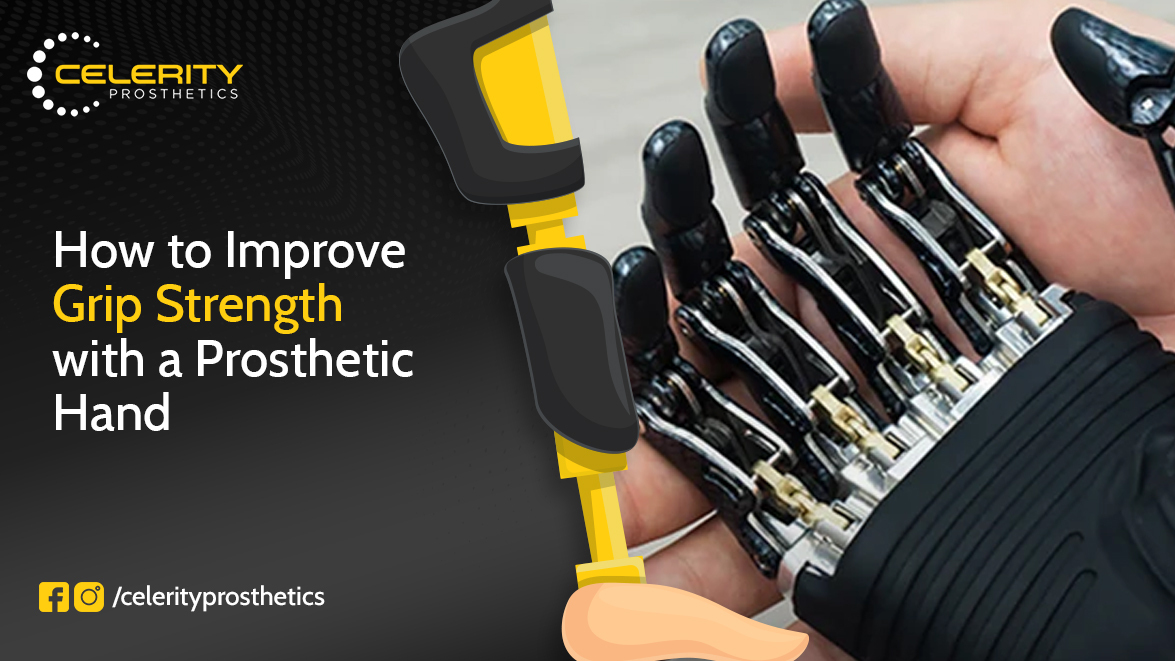
To improve grip strength with a prosthetic hand, you need to combine targeted arm muscle training, precise sensor calibration, and routine socket adjustments with your prosthetist. Practicing daily object-handling drills and working with occupational therapists train your brain to send clean control signals to your device. Keeping your socket clean and well-fitted ensures maximum power, stability, and control for everyday tasks.
Key Takeaways
- Grip strength with an artificial hand relies on strong remaining arm muscles, precise control signals, and a secure socket fit.
- Physical therapy drills and daily practice build fine motor control, muscle memory, and object handling confidence.
- Regular socket tune-ups and sensor recalibration ensure your device picks up muscle twitches quickly and accurately.
- Targeted exercises help balance muscle tone, prevent arm fatigue, and expand your daily functional independence.
10 Ways to Improve Grip Strength with a Prosthetic Hand
Mastering upper-limb movement takes patience, focus, and structured practice. Exploring these ten practical steps helps you get maximum power, stability, and control out of your device every single day.
1. Daily Muscle Strengthening Exercises
Your hand device relies directly on the muscle groups in your forearm, upper arm, and shoulders to generate control signals or pull control cables. Doing daily strength work builds the baseline muscle power you need to trigger strong, steady grips without fatiguing.
Simple exercise routines, like holding light resistance bands, doing forearm curls, and practicing shoulder flexes, keep target muscle groups active. Strengthening these core areas allows you to send clearer, stronger signals to your hand controls, resulting in a firm hold on everyday items.
2. Fine-Tuning Device Sensors
Think of the small metal contacts inside your socket as little listeners resting against your skin. Every single time you flex your remaining arm muscles, these sensors pick up those subtle twitches to tell your hand when to close. But here is the catch: if those contacts shift even a fraction of an inch away from your skin, your hand suddenly acts sluggish, stutters, or loses its holding power entirely.
That is why sitting down with a certified prosthetist on a regular basis makes such a massive difference. Your specialist can easily dial up the signal response, polish dirty contact points, or nudge the sensors back into the perfect spot making sure even the lightest muscle flex gives you an instant, firm grip.
3. Practicing Targeted Finger and Toe Movements
Building better control in your limbs helps your brain send clearer signals through your nervous system. Simple motor drills train your mind to isolate individual muscles in your arm, making daily hand movements feel far more natural.
Body balance matters just as much as hand practice. Lower-body stability work, like the alignment training used for leg prosthetics, proves how a solid stance supports your upper body. Keeping your balance centered makes it easier to lift, hold, and carry items without losing your grip.
4. Working on Variable Pressure Grasp Drills
Holding a heavy skillet requires a totally different squeeze than holding a fragile foam cup. Mastering grip strength comes down to practicing variable pressure drills so you avoid crushing soft items or dropping heavy ones.
Try picking up everyday items with different weights, such as soda cans, sponges, apples, and plastic bottles. With regular practice, your brain learns precisely how hard to flex your arm muscles to lock your hand securely around any object.
5. Managing Socket Fit and Muscle Support
A loose socket absorbs your muscle energy and lets your arm slide around inside, weakening your overall grip. When your socket fits like a glove, every ounce of muscle effort translates directly into device movement and hold power.
Proper socket fit is a universal principle across all prosthetic limbs, whether arms or legs. If your residual arm changes shape due to weight shifts or muscle growth, visit your clinic to adjust socket volume or add pad liners so your hand controls stay locked in place.
6. Isolating Specific Muscle Signals
For myoelectric prosthetics, sending one clean muscle command matters way more than squeezing as hard as you can. When you flex both sides of your arm at once, the hand gets confused and freezes mid-grip.
Try standing in front of a mirror and flexing your opening muscle, then completely relaxing it before flexing your closing muscle. Your physical therapist can even hook your arm up to a computer screen so you can watch your signal spikes in real time. Seeing those lines jump helps your brain learn to send crisp, separate commands without accidentally firing both muscles.
7. Practicing Micro-Adjustments for Small Details
Handling tiny objects requires extra patience and steady positioning. While full-foot options or prosthetic toes focus on base balance down low, upper-limb users need precise angle control at the wrist to pick up coins, keys, or eating utensils cleanly.
Practice picking up small objects off a flat table and moving them into a bowl. Working on pinch grips and tripod grips builds precision, giving you the control needed for delicate everyday tasks like buttoning shirts or turning a key in a lock.
8. Using Resistance Band Workouts for Upper Arms
For body-powered devices, grip force depends entirely on cable tension driven by your shoulder and upper back movements. Strengthening your upper body gives you the mechanical pull needed to clamp terminal devices tightly around objects.
Integrating resistance band pull-aways, shoulder blade squeezes, and arm extensions builds strong posture muscles. Working with various prosthetic arms setups allows your care team to route control cables along natural muscle pathways, maximizing your leverage with less physical effort.
9. Keeping Internal Socket Sensors Clean and Dry
Sweat, skin oils, and dead skin cells form a barrier between your skin and electronic sensors inside your socket. When dirt builds up on electrode heads, electrical signals get blocked, leaving your hand feeling weak or unresponsive.
Clean the interior of your socket and sensor heads every night using an alcohol wipe or damp cloth as instructed by your clinician. Washing your residual arm with gentle soap removes oils, ensuring clear skin contact every morning for strong grip control.
10. Partnering with Occupational Therapists for Daily Tasks
Using an artificial hand in real-world settings requires dedicated practice beyond your clinic visits. Occupational therapists excel at turning basic grip drills into practical everyday skills.
Your therapist walks you through cooking, opening glass jars, carrying shopping bags, and using tools safely. Working through these real-life tasks builds fast muscle memory, helping strong grip control feel like second nature during your everyday routine.
Daily Drills to Build Hand Control
| Exercise Type | Recommended Action | Daily Functional Benefit |
| Object Sorting | Practice picking up items of different sizes and weights | Builds spatial awareness and touch precision |
| Soft Object Squeeze | Practice grabbing empty plastic cups without crushing them | Teaches fine signal control for delicate handling |
| Heavy Carry Holds | Hold filled water bottles or bags while walking | Increases endurance and tests socket stability under load |
| Signal Mirror Work | Flex open/close muscles while watching a sensor monitor | Cleans up muscle signals and prevents cross-talk |
Conclusion
Building strong grip control with a prosthetic hand is a journey that combines physical training, technology care, and daily practice. By keeping your muscles strong, maintaining clean sensor contact, and working closely with your care team, you can master your device and tackle daily tasks with confidence. Small daily improvements add up to major gains in mobility, strength, and independence over time. Ready to fine-tune your hand control and get the most out of your device? Contact the expert team at Celerity Prosthetics to schedule your personalized fitting consultation today!
Frequently Asked Questions
Why does my prosthetic hand feel weak when I try to hold heavy objects?
A weak grip usually stems from loose sensor contact, dirty electrodes, muscle fatigue, or an ill-fitting socket. Cleaning your sensors and scheduling a socket tune-up with your specialist can quickly restore full grip strength.
How long does it take to master my prosthetic hand grip?
Most users see noticeable improvements within four to eight weeks of daily practice and physical therapy. Mastering fine motor skills and delicate object handling usually takes a few months of consistent real-world use.
Can sweating inside my socket affect my hand’s grip power?
Yes. Excessive sweat pools between your skin and internal sensors, interfering with electrical signals and making your hand controls slow or jumpy. Wiping down your arm during the day helps maintain clear sensor contact.