
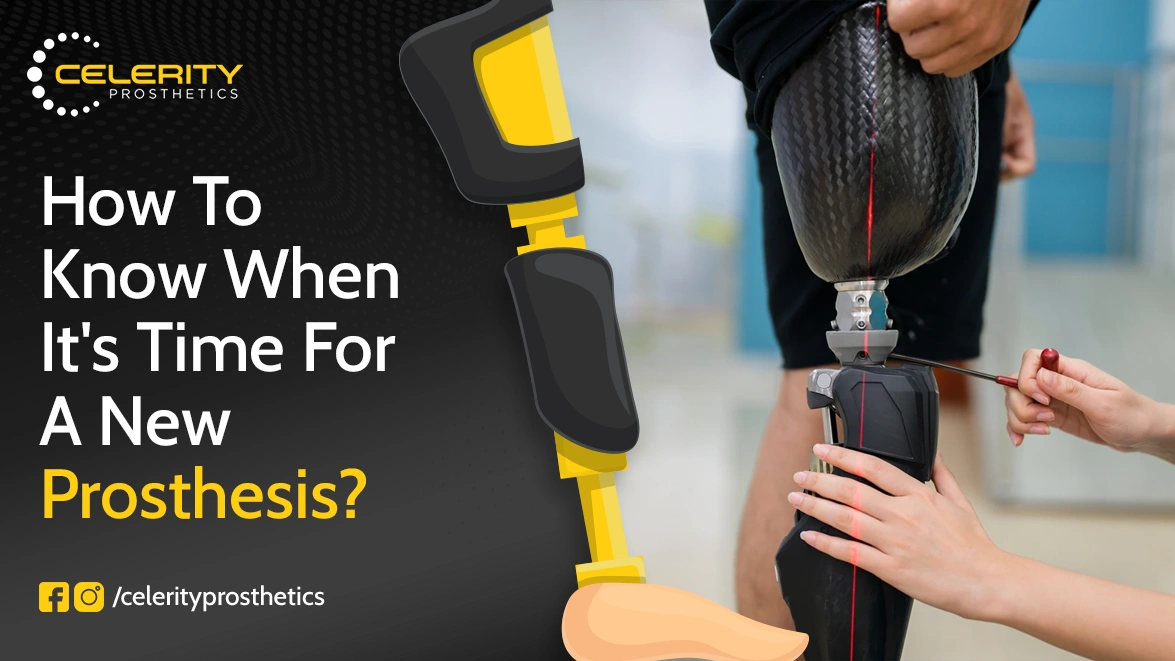
If you’re using a prosthetic limb and it’s gradually becoming uncomfortable or harder to rely on, it’s time to pay attention. You need to be aware of certain signs to know when it’s time for a new prosthesis. To many users, it may seem that the socket persists in causing pain, resulting in soreness or skin irritations that appear in the vicinity of the socket.
The socket may also experience unusual looseness or discover that the fit is losing its hold; in such cases, it might be time to check your prosthesis. Combine visible wear or mechanical sounds, weight gain or loss, and a decrease in activity level, and you have several warnings that your device may no longer fit you.
Signs You Might Need a New Prosthesis
Here are signs that your current prosthetic device might no longer be the right fit:
1. Persistent Pain or Discomfort
Ideally, your prosthesis should feel tight but comfortable. If it moves around or throws you off balance as you’re walking, it’s time for an adjustment. When your balance is off and the prosthesis feels like it’s moving way too much, it’s time to go in and get it checked. A wobbly fit could be a result of the socket losing its shape or the suspension system wearing out. This is the most obvious sign that you need a new one.
2. Frequent Skin Irritation or Sores
Is your skin red, blistered, or raw over the areas where your socket touches your limb? When skin breakdown becomes a common occurrence, it is a warning sign. Ill-fitting or worn-out prosthetic parts are often to blame. Skin conditions are one of the first indicators of an ill-fitting prosthesis. These are not just uncomfortable; they increase the risk of infection and longer recovery periods.
3. Change in Residual Limb Size or Body Weight
Your body changes. If you’ve gained or lost weight, or your residual limb has swollen or atrophied, the shape your socket was made for might not match anymore. That mismatch can manifest as looseness, shifting, or pinching. Changes in body weight or the volume of the residual limb are common causes of misfit. When you’re constantly wondering, “Does this still fit right?”, it’s a clue.
4. Visible Damage or Mechanical Wear
Check your prosthesis visually and functionally. Cracks in the socket, fraying straps, worn-out liners, warping, loosened joints — these all point to wear and tear. Components don’t last indefinitely. Over time, wear and tear can cause the device to weaken. If you’re experiencing structural issues, relying on repairs may only be a temporary solution.
5. Loose, Unstable, or Insecure Fit
Your prosthesis should feel snug but secure. If it shifts while you walk or makes you feel off-balance, it’s time to have it checked. The instability will not only cause confidence issues but also increase the risk of falls. In many cases, a loose-fitting prosthesis may indicate that the socket has lost its shape or the suspension system is no longer functioning correctly. This is among the most evident indicators that it needs to be changed.
6. Too Tight or Restrictive Socket Feel
When you feel that the socket space is suddenly shrinking, everything seems to be pushed together a bit and changing. As your limb volume fluctuates due to factors like edema, muscle atrophy, or fluid shifts, the socket may become too tight or restrictive. If your socket is causing discomfort or pain while wearing your prosthesis, it’s best to consult your prosthetist at this point. Your prosthesis should be a natural part of you, not an impediment.
7. Reduced Mobility, Balance, or Gait Changes
You used to walk, jog, or climb stairs with confidence. Now you feel yourself favoring one side, taking shorter steps, or hesitating on uneven surfaces. These changes often stem from altered prosthetic performance, either in structure or fit. A prosthesis should enable fluid movement. If your movement is becoming constrained, the device may be limiting you even if you don’t feel pain yet.
8. Frequent Repairs or Adjustment Needs
If you have increased your visits to the prosthetist (to tighten straps, change parts, and make continuous adjustments), these visits could be a sign beyond normal wear and tear. This may indicate that the device has reached the end of its lifespan. Multiple repairs are a clear indicator that replacement might be a better option. Sometimes, doing the same repair over and over is more of a hassle than starting anew.
8. Unusual Noises or Mechanical Sounds
Unusual noises, such as clicking, squeaking, creaking, or any other unfamiliar mechanical sound coming from the prosthesis, are a warning of wear or misalignment. The components could have loosened or degraded. Unusual noises are often one of the first signs of wear or misalignment. And don’t ignore those noises, as these are the ways through which your device sends you messages.
9. Lifestyle or Activity Level Mismatch
Perhaps you maintained a steady activity level when your prosthesis was fitted. But, now you’re more active, or you’ve taken on a new sport or job that requires more from your device. That older model may no longer meet the demand. If your level of activity increases, you may need a refitting or a new device. Your device should keep pace with your life, not hold you back.
10. Outdated Technology or Inadequate Performance
Prosthetic technology evolves quickly. If your device feels heavy, stiff, or lacks responsive motion, newer models might offer a noticeable improvement. Microprocessor knees, energy-return feet, and lightweight carbon fiber designs can enhance your natural movement. Even if your prosthesis is still functional, upgrading to newer technology can make daily activities easier and reduce fatigue.
11. Bodily or Health Condition Changes Affecting Fit
Health conditions, such as joint disease, swelling due to vascular issues, surgeries, or skin conditions, can all interfere with prosthetic fit and function. As your body changes, your prosthetic device should adapt accordingly. Listening to your body remains your best guide.
Conclusion
Knowing when it’s time for a new prosthesis isn’t about admitting defeat. It’s about acknowledging that your body needs new solutions with the right support. We’ve explored how pain, fit changes, activity shifts, wear and tear, and health changes all point to that moment. When it starts to feel wrong, that’s your cue. The key is recognizing when your prosthesis no longer works for you, and instead, you’re working against it. Early action leads to better comfort, better mobility, and fewer setbacks.
Contact Celerity Prosthetics to learn more about the signs and which prosthetics are best suited for you.