
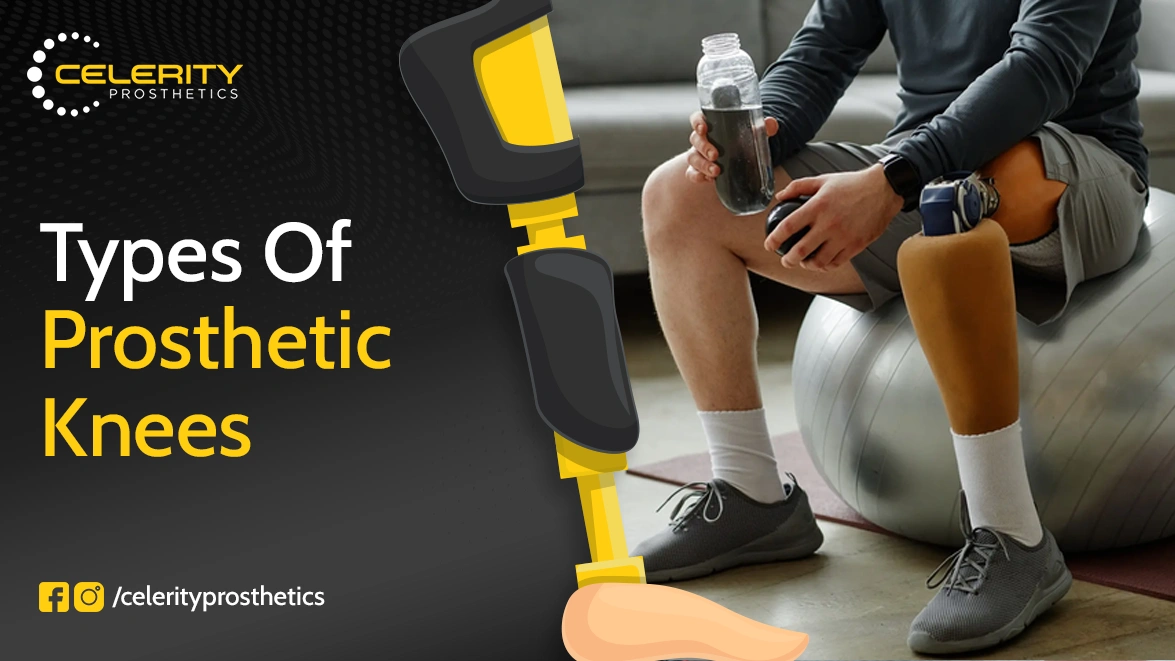
Choosing a prosthetic knee is an important step toward moving comfortably and safely in your daily life. There are different types of prosthetic knees you can consider, including mechanical knees, microprocessor-controlled knees, hydraulic knees, pneumatic knees, and hybrid knees. Each type has its own way of helping you walk and stand, offering different levels of support, comfort, and ease of use. Whether you need a knee for simple daily activities or one that helps you stay active and steady on different surfaces, understanding these options will help you and your prosthetist choose the right fit for your lifestyle and goals.
All Types of Prosthetic Knees You Need To Know About
Let’s take a look at what each type of prosthetic knee is and how it works.
Mechanical Knees
Mechanical knees are the most common type, known for being simple, durable, and easy to maintain. They work using a hinge that allows your knee to bend when you walk and keeps it straight when you stand for stability. There are two main styles: single-axis, which has one pivot point for straightforward movement, and polycentric, which has multiple pivot points that let the knee bend in a way that feels closer to a natural leg motion. Some mechanical knees come with a manual lock that keeps the knee straight while standing or sitting, which provides an extra safety element as you get used to your prosthesis. Mechanical knees are a solid choice if you need a reliable, budget-friendly knee for everyday walking and standing.
Microprocessor-Controlled Knees
Microprocessor-controlled knees have a small computer inside that automatically adjusts how the knee moves while you walk. This system uses sensors to check your walking speed, how you are moving, and the surface you are walking on, then quickly changes the knee’s resistance to match your pace. It helps you walk with a smoother, more natural motion and makes it easier to go up and down slopes or handle uneven ground safely. If you stumble, the knee can stiffen quickly to help prevent a fall. Microprocessor knees are a good choice if you are active or walk on different types of surfaces daily, providing extra safety, confidence, and smoother movement throughout your day.
Hydraulic Knees
Hydraulic knees use fluid in the knee to control how fast or slow your leg moves when you walk. This system helps you adjust to different walking speeds, making your steps smoother whether you are walking slowly around the house or moving faster outside. Hydraulic knees can also make sitting down and standing up easier by providing steady resistance and support. They give a more natural feel while walking by controlling your leg’s swing for a smoother, balanced gait. If you want a knee that supports you during different activities, while also giving you control and comfort, a hydraulic knee is a reliable option.
Pneumatic Knees
Pneumatic knees use air pressure to help manage how the knee bends and straightens while you walk. The air system adjusts to your walking speed and step length, giving you a smoother and more effortless feel. Pneumatic knees are often lighter than other types, which can help reduce tiredness during daily activities and make the prosthesis easier to handle. These knees are helpful if you walk at varying speeds or want a knee that is responsive without feeling heavy. A pneumatic knee can be a good fit if you want comfort and flexibility in your everyday movements while keeping your prosthesis light.
Hybrid Knees
Hybrid knees combine the benefits of hydraulic, pneumatic, and microprocessor-controlled systems to provide advanced support and flexibility. These knees can adjust to your walking speed, surface changes, and movements in real time, making it easier to handle different activities like walking on slopes, climbing stairs, or moving quickly when needed. Some hybrid knees also use a microprocessor to fine-tune how the knee responds, helping you maintain balance and reducing the risk of falls. Hybrid knees are a strong option if you have an active lifestyle, want a prosthetic knee that can keep up with you, and provides stability, comfort, and adaptability throughout your daily activities.
Conclusion
Finding the right prosthetic knee is about more than just walking again, it’s about feeling steady and comfortable in your everyday life. Whether you need the simplicity of mechanical knees, the smart adjustments of microprocessor-controlled knees, the steady movement of hydraulic knees, the light feel of pneumatic knees, or the flexibility of hybrid knees, each type has unique benefits to match your daily needs and lifestyle. At Celerity Prosthetics, we understand that each person’s journey is different. We are here to guide you in choosing a prosthetic knee that helps you move confidently and comfortably, so you can get back to living your life with ease. Reach out to us today to find the right support for your next steps.