
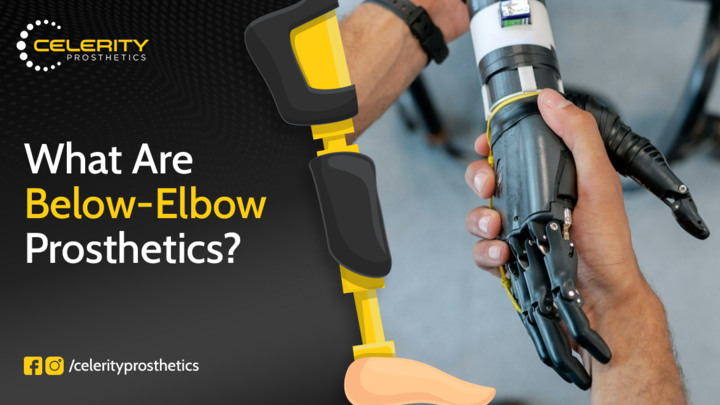
Below-elbow prosthetics are devices designed to replace the part of the arm missing from the elbow down. They allow people to regain movement, independence, and confidence in everyday life. These prosthetics come in several forms, including body-powered models that use cables and harnesses, myoelectric devices that respond to muscle signals, hybrid systems that combine both methods, and passive options that focus on appearance and balance. Knowing what below-elbow prosthetics are helps individuals, caregivers, and medical professionals understand the available options for restoring hand and forearm function.
Understanding Below-Elbow Prosthetics
Below-elbow prosthetics are artificial arms that replace the part of the limb from the elbow down to the wrist or hand. Their main purpose is to allow people to perform everyday actions that would otherwise be challenging without support. A typical prosthesis includes a socket that fits snugly over the remaining limb, a suspension system to keep it secure, and a terminal device such as a hook, hand, or electronic component.
For beginners, it helps to think of these prosthetics as tools designed with two goals: restoring movement and offering a natural appearance. Some devices are simple and focus mainly on stability, while others use advanced technology to mimic hand and wrist motion. Regardless of design, the goal is to help the wearer live with more freedom and confidence.
Types of Below-Elbow Prosthetics
Now that you know what below-elbow prosthetics are, let’s explore the different types and how they function.
1. Body-Powered Prosthetics
These devices rely on cables, straps, and harnesses to transfer the wearer’s body movements into arm or hand movements. For example, when the shoulder moves, it pulls on a cable that opens or closes a hook or hand. Body-powered prosthetics are often chosen because they are sturdy, affordable, and require little maintenance. Although they may not look as natural as advanced options, they provide dependable function for everyday activities.
2. Myoelectric Prosthetics
Myoelectric devices use small sensors placed on the skin of the remaining limb. These sensors detect electrical signals from muscles and convert them into movement, allowing the prosthetic hand or wrist to move naturally. They often come with multiple grip patterns, enabling tasks like holding a glass, typing, or turning a key. Myoelectric prosthetics are more expensive and require charging, but they provide the most natural control and appearance.
3. Hybrid Prosthetics
As the name suggests, a hybrid prosthesis combines body-powered and myoelectric prosthesis features. For example, the elbow might be controlled by a harness, while the hand is powered by muscle signals. This gives wearers the strength and reliability of a body-powered arm while enjoying the fine control of a myoelectric hand. Hybrids are ideal for people who want a balance between durability and advanced function.
4. Passive Prosthetics
Passive prosthetics are not built for active movement. Instead, they serve cosmetic and supportive roles. The prosthetic arms are lightweight, comfortable, and look like a natural arm or hand. Although they cannot grip or hold objects, they help restore body balance, improve posture, and boost confidence in social settings. Passive prosthetics are often chosen by people who value appearance or do not need active function.
Benefits of Below-Elbow Prosthetics
Understanding these types makes it easier to see how each one meets different needs. But what makes below-elbow prosthetics so valuable in daily life is the benefits they provide.
- Greater Independence: Everyday tasks such as cooking, dressing, or using a phone become easier, reducing the need for constant help from others.
- Improved Mobility: Prosthetics provide balance and stability, allowing wearers to carry items or complete household and work activities with more control.
- Emotional Confidence: Restoring the look and function of an arm can help people feel more comfortable in public and regain self-esteem.
- Choice and Flexibility: With multiple types available, individuals can select the design that best suits their lifestyle – whether that’s strength, precision, or appearance.
- Support for Active Lifestyles: Many prosthetics are designed to handle sports, hobbies, and physical work, giving wearers the freedom to pursue activities they enjoy.
Conclusion
Below-elbow prosthetics are life-changing devices that restore the function and appearance of the arm below the elbow. The different types of below-elbow prosthetics include body-powered, myoelectric, hybrid, and passive; each serves a purpose, whether that means strength, fine control, or cosmetic support. Together, they give wearers the chance to cook, write, carry objects, or simply feel more at ease in social situations. The benefits extend far beyond movement, offering renewed independence, confidence, and the freedom to live actively.
At Celerity Prosthetics, patients are guided toward the right prosthetic solution with compassion and expertise, ensuring that every choice supports both physical needs and personal goals.