
The first time you see a prosthetic leg up close, it’s surprising how real it looks; not just in shape, but in how it moves. You can hear the faint click of the knee when it bends, feel the smooth surface of the socket, and notice how light it actually is when someone lifts it. But inside that simple look, there’s a lot happening.
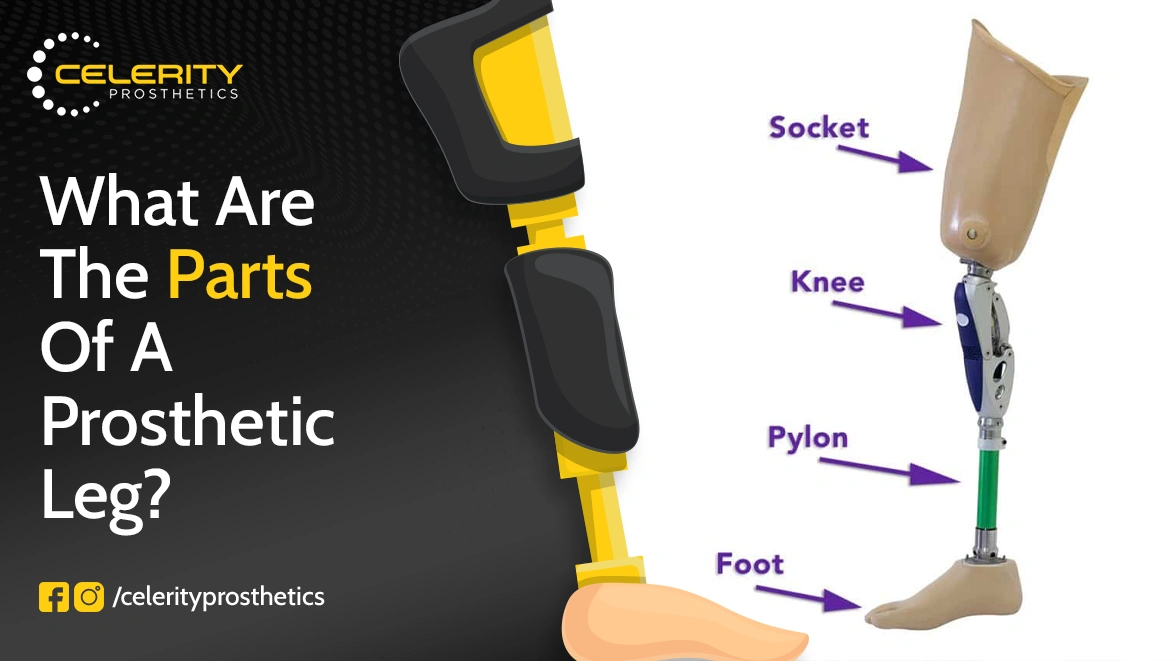
Every prosthetic leg is built from key parts: the socket, liner, suspension system, knee, pylon, and foot. Some people also have a cosmesis, a soft cover that makes the leg look more natural. Each piece has a job: one connects, one cushions, one supports, one moves. Together, they build something that doesn’t just replace what was lost but helps you walk, stand, and feel balanced again.
The Main Parts of a Prosthetic Leg
Every prosthesis is a little different. What stays the same are the pieces that make it all work.
1. Socket
When you slip your limb into the socket, that’s the start of everything. It’s the part that connects you to the prosthesis. A well-made socket feels snug, not too tight, not too loose. You can almost feel it hug the shape of your leg.
Prosthetists take their time shaping it because every contour matters. If it’s even slightly off, pressure builds up in one spot and makes walking uncomfortable. But when it fits right, it just feels like part of you.
2. Liner
Next comes the liner: soft, smooth, sometimes cool to the touch. It’s usually made from silicone or gel, and it sits right between your skin and the socket. The liner keeps friction away and helps with comfort during long wear.
There are a few versions. A locking liner clicks in with a small pin. A seal-in liner creates suction to keep everything tight. A cushion liner just adds extra padding. You’ll notice the difference as soon as you put one on; the liner decides whether your prosthesis feels gentle or stiff.
3. Suspension System
The suspension system is the part that actually keeps the prosthetic in place. You don’t really see it working, but you definitely feel it if it’s off.
There are a few kinds: suction, vacuum, pin locks, and sleeves. Suction uses air pressure, vacuum systems use small pumps to hold steady, and pin locks use that satisfying “click” that lets you know it’s secure. Sleeves slide up over your leg and keep things soft but steady.
You can move, stretch, sit, and it stays with you. That’s how you know it’s doing its job.
4. Prosthetic Knee
If your amputation is above the knee, this part does the heavy lifting. The prosthetic knee controls how you bend, sit, and move.
Mechanical knees work with simple hinges that are reliable and easy to maintain. Microprocessor knees, on the other hand, feel almost alive. They adjust automatically when you walk, speed up, slow down, or shift your weight. You can actually hear the quiet hum when they move.
It takes practice to trust it, but once you do, your stride starts to flow again – not stiff or forced, just steady.
5. Pylon
The pylon is the frame that holds everything together. It connects the upper parts to the foot and carries your weight down each step. You won’t always see it because it’s often covered, but it’s what gives the leg its balance and structure.
Most are made from carbon fiber or titanium, so they’re light but incredibly strong. Some pylons even have tiny shock absorbers that soften each step, especially on hard ground. It’s quiet, smooth, steady, and exactly what you want.
6. Foot
This is the part that meets the world. The prosthetic foot absorbs shock when you step and helps you stay balanced as you move. It’s more complex than it looks.
Some feet are basic and stable for everyday use. Others store energy and give a spring-like return when you walk. And if you’re athletic, there are specialized versions made just for running or climbing.
You can feel the difference with every step. A good foot moves naturally, rolling forward like you’re used to.
7. Cosmesis
A cosmesis is the final touch, if you want it. It’s a realistic cover made from silicone or PVC that matches your skin tone. Some people even have theirs detailed with freckles, veins, or tattoos.
When you touch it, it feels smooth, almost like skin. It also protects the prosthetic from dust, dirt, and moisture. Some skip it because they like the mechanical look. Others prefer the natural finish. Either way, it’s your call.
How It All Works Together
When you put it all together – the socket holding firm, the liner cushioning the skin, the suspension keeping it secure, the pylon and foot moving with rhythm – it starts to feel right. The movements line up with your body again. You stop noticing each part and start noticing how easy it feels to move.
It takes time, a few adjustments, and patience, but then one day, you just walk. You don’t think about it. You just move.
Conclusion
A prosthetic leg is made from different parts. The socket, liner, suspension, knee, pylon, and foot; each one does something essential. The socket keeps it connected. The liner softens the contact. The suspension holds it steady. The knee, pylon, and foot work together to make walking feel natural. Some people finish it with cosmetics for that lifelike look and texture.
When everything fits the way it should, the leg doesn’t feel foreign. It moves when you move. It bends, balances, and supports you like it’s always been there.
At Celerity Prosthetics, we make sure each part is tuned to you and built to feel comfortable, natural, and ready for real life.