
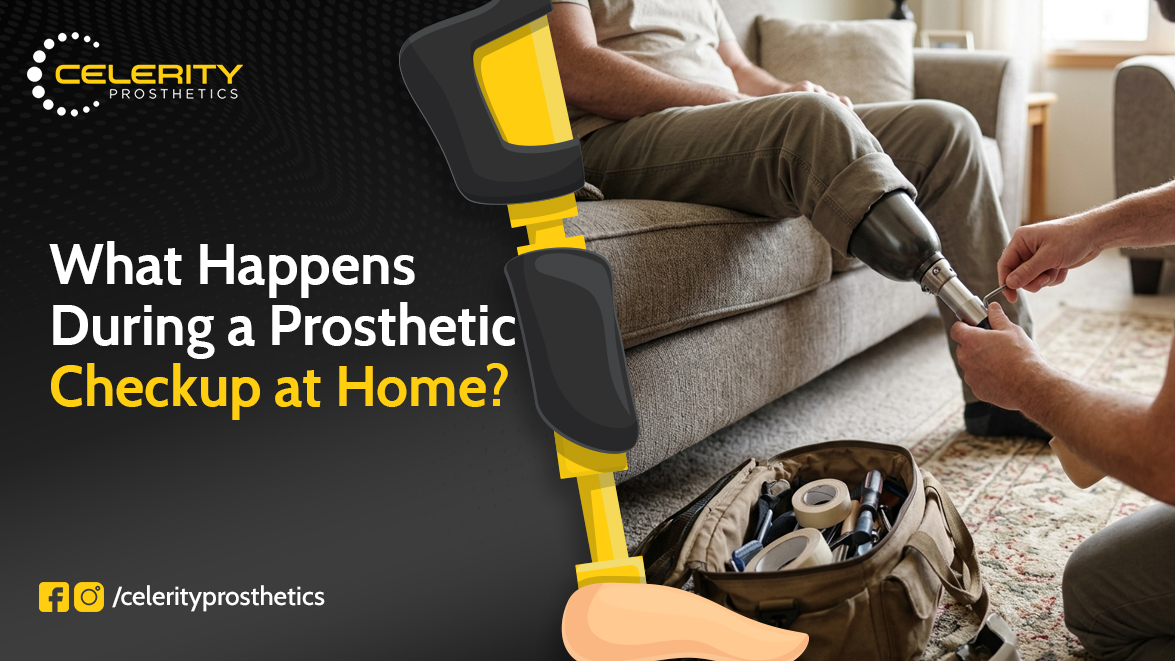
Getting to a clinic for a prosthetic adjustment can mean arranging a ride and losing most of a day, especially for people recovering from surgery or living in a care facility. A home visit removes that trip. A prosthetist comes to you, asks how the prosthesis has been fitting, checks your skin and residual limb, then looks at the socket, suspension, and parts while you stand and walk. Small fixes such as padding, alignment changes, and tightening hardware often happen during the same prosthetic checkup at home.
Key Takeaways
- A home checkup follows a set order: a scheduling call, a talk about how the prosthesis has been working, a skin check, a fit check, a walking assessment, a parts inspection, and any adjustments that can be made on site.
- Padding, alignment, height changes, liner swaps, and hardware tightening are usually handled at home. Lamination, finishing work, and complex refits still go through the clinic or lab.
- Visits are most frequent in the first year after amputation, when the limb changes size quickly.
- Medicare Part B covers prosthetic care a provider orders, usually with 20% coinsurance after the deductible though private plans set their own rules.
How Does a Home Prosthetic Checkup Work?
Most home visits follow the same order as a clinic appointment. Each stage builds on the one before it, starting with a phone call a few days ahead.
1. A Call Before the Visit
Someone from the office usually calls a few days early to confirm the address and time. That call is the right moment to mention new problems, such as a cracked foot shell or a torn liner because the prosthetist can then bring the right parts instead of ordering them afterward.
2. A Conversation About How the Prosthesis Has Been Working
The visit starts with questions rather than tools. Expect to be asked how many hours a day you wear the prosthesis, how many sock plies you need by evening, and whether you have fallen. A drop in daily wear time is one of the clearest signs that the fit or comfort has changed.
3. A Skin and Residual Limb Check
With the liner off, the prosthetist looks at the skin over bony areas and at the end of the limb. The Amputee Coalition advises watching for red pressure patches that last more than a few minutes after the prosthesis comes off, since they can mean the socket needs checking. Blisters, rashes, and changes in limb shape are noted too, because they often point to the exact spot where the socket presses or rubs.
4. A Socket Fit and Suspension Check
Next comes the fit itself. The prosthetist checks how deep the limb sits in the socket, how many sock plies it takes to feel snug, and whether the limb moves up and down with each step, a problem called pistoning. Suspension parts such as a pin lock, suction valve, or sleeve are tested as well.
5. Watching You Stand and Walk
Gait is easier to judge where you actually walk. Watching you walk on your own floors, stairs, and thresholds shows how the prosthesis handles the surfaces you use every day. The prosthetist looks at step length, how evenly weight shifts between legs, and whether the knee or foot responds properly.
6. A Component and Hardware Inspection
Feet, knees, pylons, and adapters wear out at different rates, depending on activity level and daily wear time. At home, the prosthetist checks screws for looseness, the foot shell for cracks, and the knee for clicks or uneven resistance. Microprocessor knees and powered ankles may also need their battery and settings reviewed.
7. On-the-Spot Adjustments and a Plan for Next Time
Small corrections usually happen before the prosthetist leaves. A pad might be added over a pressure spot, the foot angle changed by a few degrees, or a loose bolt tightened. Anything that needs lab work, like a new socket, goes into a written plan with the next steps and a target date. You should finish the visit knowing when the next appointment is and who to call if the fit changes before then.
What Can and Can’t Be Done During an In-Home Prosthetic Visit?
How much gets done at home depends on the tools and materials the prosthetist can carry in a vehicle. Routine adjustments usually fit into a single visit. The table below shows how common tasks usually split:
| Task | Usually done at home? | What happens if not |
| Padding | Yes | Bigger socket changes are planned later |
| Alignment | Yes | Rechecked at a follow-up visit |
| Height changes | Yes, in most cases | A new pylon is ordered and fitted later |
| Liner or sleeve swaps | Yes, if the part is on hand | The new liner or sleeve is ordered and delivered |
| Tightening hardware | Yes | Damaged parts are replaced at the next visit |
| Casting or scanning | Often | The limb is cast or scanned at the clinic |
| Test socket fitting | Sometimes | Difficult fittings move to the clinic |
| Lamination or finishing | No | Done in the lab, then delivered to you |
| Complex refits | Rarely | Completed at the clinic over several visits |
Complex refits may still need a clinic visit. In an interview with O&P Edge, a trade publication covering orthotics and prosthetics (O&P), a practitioner with a mobile clinic program explained that their vehicles carry materials for minor adjustments, such as lengthening or shortening a prosthesis. Finishing work happens at a central lab. Patients with hard-to-fit limbs come to the office for “a more controlled environment.”
How to Prepare for a Prosthetic Checkup at Home
A little preparation lets the prosthetist see problems clearly and finish more work in one visit, which can save a second appointment or a trip to the clinic. Before the appointment, it helps to have these ready:
- A clear path between two rooms and a sturdy chair without wheels.
- Every sock, liner, and sleeve you currently use, including worn ones.
- The shoes you wear most often since a different heel height can change alignment.
- A short list of problems, with dates and photos of any red marks.
- Your insurance card and any required prescription.
How Often Should You Have a Prosthetic Checkup?
The first year after amputation brings the most visits, because the residual limb keeps changing size and shape as swelling goes down. University of Utah Health describes this period as one that requires frequent visits to check the prosthesis for fit and function. Once the limb is stable, many prosthetists suggest a routine check at least once or twice a year. A visit should come sooner after a weight change, a new skin problem, a fall, or any change in how the socket feels.
Does Insurance Cover an At-Home Prosthetic Checkup?
Coverage usually depends on the care you receive rather than where you receive it. Medicare Part B covers artificial limbs that a doctor or other provider orders. Medically necessary repairs and adjustments are generally covered as well. Patients usually pay 20% of the Medicare-approved amount after the yearly Part B deductible. Medicaid and private plans set their own rules for prior approval and coinsurance. The prosthetist’s office can confirm your benefits when the visit is booked.
Who Benefits Most From Prosthetic Checkups at Home?
Home visits suit many people, though they make the biggest difference for anyone who finds a trip to the clinic tiring, risky, or hard to arrange because of health, mobility, or transportation limits. That often includes:
- People in the first months after amputation, when getting in and out of a car is still difficult.
- Older adults who no longer drive or depend on family for rides.
- Residents of nursing homes, rehabilitation centers, and hospitals.
- People with a wound or skin breakdown who have been told to limit walking.
Conclusion
A home prosthetic checkup follows a clear sequence: a call, a conversation, a skin check, a fit check, a walking assessment, a parts inspection, and any adjustments that can be made on the spot. Padding, alignment, height, and hardware changes are usually handled at home. Lamination and complex refits still go through the lab or clinic.
At Celerity Prosthetics, our mobile team brings follow-up care, diagnostic fittings, adjustments, and care instruction to your home, a nursing facility, a rehabilitation center, or a hospital. Contact us to schedule a checkup at home or wherever it is easiest for you.