
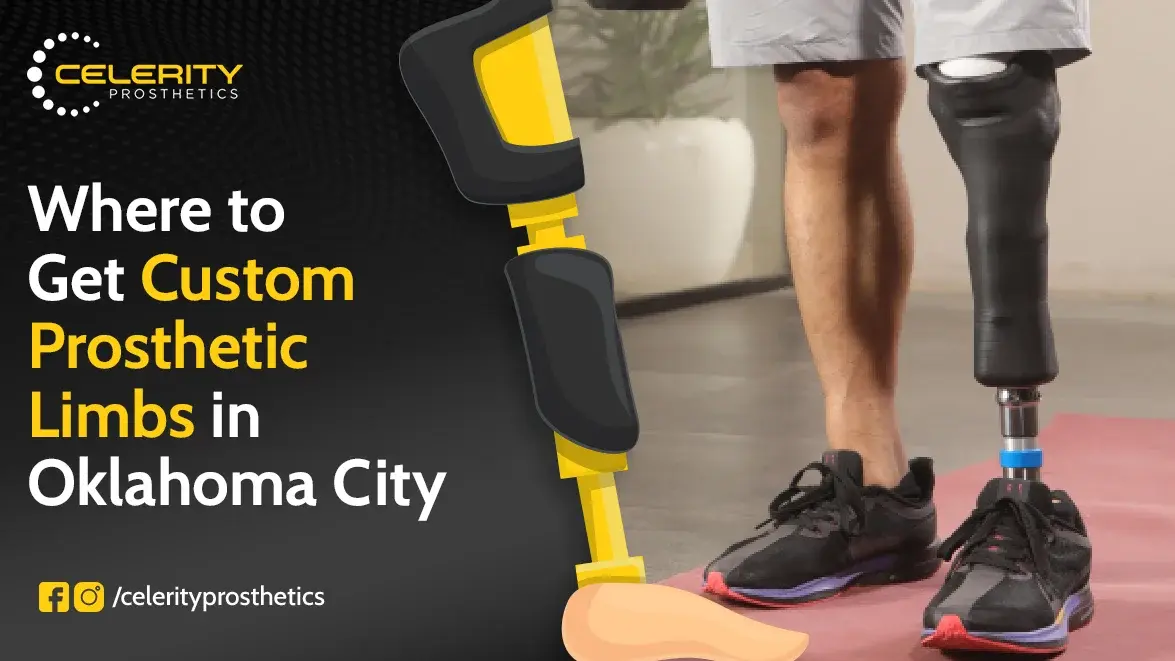
In OKC, you could get custom prosthetic limbs at Celerity Prosthetics, a trusted provider. It can be for you or your pet, doesn’t matter. Custom prostheses are offered for both. The process consists of evaluation, fitting, and ongoing support. So that means, instead of generic solutions, the focus is on building prosthetics around the body and the daily needs of the candidate. That makes a real difference.
What Are Custom Prosthetic Limbs?
Custom prosthetic limbs are designed specifically for one person. They are built around your body, your movement, and your lifestyle.
Here is what goes into these prosthetic services:
- Precise measurements of your limb
- A socket designed for comfort and stability
- Alignment that matches your natural posture
- Components selected based on your activity level
Types of Custom Prosthesis
There are different types depending on your needs:
- Upper limb prosthetics
- Designed for arms and hands
- Help with gripping, lifting, and daily tasks
- Lower limb prosthetics
- Designed for legs and feet
- Focus on walking, balance, and mobility
- Advanced prosthetics
- Can respond to muscle signals
- Provide smoother and more controlled movement
One thing to remember. Fit matters a lot.
If the fit is wrong, everything feels off.
Custom prosthetics are meant to improve:
- Comfort
- Function
- Confidence
Simple outcome. Life feels easier to manage.
Where Can We Buy Custom Prosthetic Limbs in Oklahoma City?
Top Prosthetic Provider in Oklahoma City
In Oklahoma City, custom prosthetic care is provided through specialized clinics that focus on full-service support. We offer a structured approach to prosthetic care. Services typically include:
- Initial evaluations to understand your condition
- Custom design and fabrication of prosthetic limbs
- Fitting sessions to ensure comfort and alignment
- Ongoing adjustments and follow-up care
The process usually looks like this:
- Consultation to discuss your needs
- Detailed measurements and assessments
- Creation of a test socket
- Adjustments based on feedback
- Final prosthetic fitting
There is also a focus on accessibility.
- Care can be provided in clinics
- Support may extend to homes or care facilities
This helps people who cannot easily travel. It also makes the process more flexible.
Another key part is long-term support.
- Repairs and maintenance
- Re-fitting when needed
- Guidance on using the prosthetic properly
This is not a one-time interaction. It is ongoing.
How to Choose the Right Prosthetist in OKC
Trying to look up prosthetic companies near me? If yes, don’t worry. We are here to help you figure out the process so you can find the best prosthetist in OKC.
Evaluate Experience
Experience directly impacts the quality of your outcome.
Look for a prosthetist who:
- Has worked with cases similar to yours
- Understands both upper and lower limb prosthetics
- Has a track record of consistent results
Every case is different. An experienced prosthetist knows how to adjust the process based on individual needs. That reduces trial and error. It also helps avoid complications later.
Look for Proper Certification
Start with qualifications. This is the foundation of everything.
- A certified prosthetist has gone through formal education and clinical training
- Proper licensing ensures they meet professional and safety standards
- Clinical experience means they have worked with real patients
This is not something to overlook. If a provider cannot clearly show their credentials, it introduces unnecessary risk. You want someone who is trained to handle both the technical and medical aspects of prosthetic care.
Prioritize Communication
This part is often underestimated. However, it shapes your entire experience.
You need someone who:
- Listens to your concerns without rushing
- Explains each step in a way that is easy to understand
- Takes your goals seriously, not just the clinical requirements
If communication feels unclear or one-sided at the beginning, it usually stays that way. A good prosthetist treats the process as a collaboration.
Ask About the Process
A proper prosthetic fitting process should be detailed & structured.
You should expect:
- An initial consultation to understand your condition. And your goals too.
- Accurate measurements & evaluations
- Trial fittings to test comfort & function
- Final adjustments before completing the prosthetic
Each step serves a purpose. Skipping or rushing through them can lead to poor fit and discomfort. A well-defined process usually leads to better long-term results.
Give your pet the freedom to run, play, and thrive again—start their journey to mobility today.
Check Customization Options
Customization is what makes a prosthetic truly effective.
Ask about:
- How much the fit can be adjusted over time
- Whether the design can be tailored to your lifestyle
- Available functional upgrades based on your needs
Even small adjustments can significantly improve comfort and usability. A provider that offers flexible customization is better equipped to meet your expectations.
Understand Follow-Up Care
Getting a prosthetic is not the end of the process. It is the beginning of ongoing care.
Make sure the provider offers:
- Regular adjustments as your body changes
- Repair services when needed
- Long-term monitoring and support
Over time, your needs may shift. A prosthetic that fits perfectly today might need changes later. Having access to continued care ensures your prosthetic keeps working the way it should.
Consider Accessibility
Accessibility can make the entire experience easier and less stressful.
Some providers offer:
- In-clinic appointments for routine visits
- Mobile services for home, hospital, or rehabilitation settings
This flexibility is especially helpful if travel is difficult. It also ensures you can receive care when and where you need it.
Read Also: How Amputees Can Prepare for Winter Weather To Prevent Slips and Falls?
Conclusion
Getting a prosthetic limb in Oklahoma City is not as difficult as it may seem at first. It is a structured process… but only if you know what to expect. It starts with understanding your needs and ends with a prosthetic designed specifically for your body and lifestyle!
Providers like Celerity Prosthetics handle this full journey. The key is to take your time and focus on quality. A well-fitted prosthetic does more than restore movement. It improves how you live every day.
When done right, it feels natural and honestly? That is the goal. So choose carefully and ask questions. Make sure the process works for you.
Answering Common Questions
What types of custom prosthetic limbs are available?
There are several types available:
- Upper limb prosthetics for arms & hands
- Lower limb prosthetics for walking.
- Advanced prosthetics that come with responsive technology
- Custom sockets that are designed for comfort
Each option is tailored to how you live and what you need daily.
How long does it take to get a custom prosthetic limb?
The process usually takes a few weeks. It depends on the complexity of the prosthetic. And the scheduling of fittings.
Can I try different prosthetic options before deciding?
Yes. Most providers, including Celerity Prosthetics, offer trial fittings. So you can test comfort, function, and fit before the final prosthetic is made.