
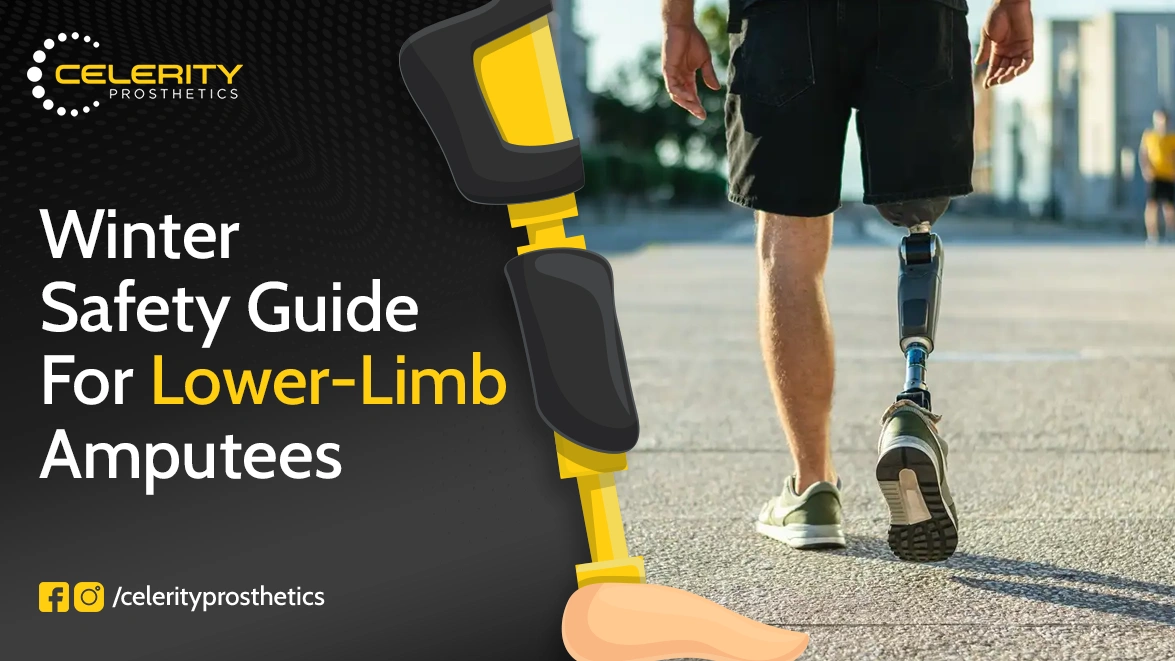
Winter alters how your body and prosthetic leg interact with the world around you. Cold air stiffens parts, ice shifts balance, and even thick layers of clothing can push against your socket. Those are small things, but they add up fast. You move more safely when you prepare your prosthesis indoors, choose footwear with real traction, dress in layers that keep your fit stable, and adjust your steps on icy ground.
Your skin needs more attention, slip prevention matters, and keeping your home entry clear helps just as much as knowing which days are simply too dangerous to be out. All of these habits make a big difference, and that is exactly why a winter safety guide for lower-limb amputees makes such a difference.
Understanding Winter Risks for Lower-Limb Amputees
Cold weather affects prosthetic parts differently. Metal cools fast, and joints feel a little stiff until they warm back up. If you use a knee with electronics, the battery drains faster than you expect. The skin on your residual limb might get dry or irritated, especially after long walks outside.
Then there’s the ground. Snow hides dips and bumps. Ice makes every step feel like a small question. Thick jackets and pants can rub against your socket, and that changes how you move more than people realize. These things aren’t deal breakers. They’re just signals to slow down and pay attention before heading outside.
Steps to Stay Safe and Steady in Winter Weather
Here are the steps to follow when you are out in the cold with your prosthesis:
Step 1: Prepare Your Prosthesis Before Going Outside
Take a minute inside where it’s warm. Flex the knee or ankle if your leg has moving parts. It helps them settle before you step into the cold. Give the socket a quick check for moisture. If you use a powered knee or foot, look at the battery level. Cold air drains it fast. A fast warm-up routine makes the first few steps outside feel steadier.
Step 2: Choose Footwear and Traction That Work in Real Winter
Shoes matter more than people think. You want deep treads that grab the snow instead of sliding over it. Rubber soles handle wet ground better than stiff ones. Some folks use ice cleats, but check first to see if your prosthetic foot can handle them. A mismatched traction device can throw your balance off instead of helping.
Step 3: Dress Warm Without Messing Up Socket Fit
Layering keeps you warm, but bulky clothes can push against your socket and make walking awkward. Several thin layers feel better than one thick one. If your limb tends to get cold easily, use a liner that wicks away moisture to keep it warm and dry. Sweat cools quickly in winter, and that discomfort shows up fast once it sits inside the socket.
Step 4: Adjust Your Walking Technique on Slippery Ground
The trick on winter ground is not speed. Smaller steps give you better control. Keep your feet under your center instead of reaching too far with each stride. If you see a shiny patch, tap it lightly with the toe before committing your weight. Turning slowly helps too. Quick turns are where many slips occur.
Step 5: Protect Skin and Limb Health in Cold Weather
The skin on your residual limb reacts to winter more than you’d expect. Dry air, liners, and long walks combine to irritate. When you come inside, remove the prosthesis briefly and check for moisture. Wipe everything down. Ensure the liner dries completely before reapplying it. This tiny habit prevents redness, rubbing, and soreness later.
Step 6: Know How to Handle Slips and Falls Safely
Even careful people slip. If you feel yourself losing balance, lower your weight instead of trying to fight it. If you do fall, roll onto your side or knees before standing. Look for a railing, a wall, or a steady object to hold onto. Hard pushes on icy ground only slide you backward.
Step 7: Keep Your Home Entryway Winter-Proof
A lot of falls happen right inside the front door. Snow melts fast and turns your floor into a slick spot. Keep a thick mat near the entrance and wipe the prosthetic foot before stepping in. Wear shoes or grippy slippers inside. Socks on tile or hardwood can be as slippery as ice outside.
Step 8: Know When the Weather Isn’t Worth It
Some days, staying inside is the safer call. Freezing rain, deep slush, and strong winds make even short trips risky. If you do have to go out, choose safer routes. Give yourself extra time. Tell someone where you’re going. Winter safety is mostly about choosing the right moment to move.
Conclusion
Winter becomes far easier to navigate once you build a routine that fits the season. Preparing your prosthesis before heading out, choosing shoes with strong winter grip, layering clothing to keep your socket comfortable, and taking shorter steps all help maintain your balance. Your skin needs a bit more care, and practicing how to handle slips gives you confidence when the ground turns icy.
Keeping your entryway dry matters just as much as choosing which weather you should avoid altogether. When all of these steps work together, winter feels less unpredictable and more manageable. That is the real purpose of a winter safety guide for lower-limb amputees, and if you need help adjusting your prosthesis for colder months, we at Celerity Prosthetics are ready to support you.