
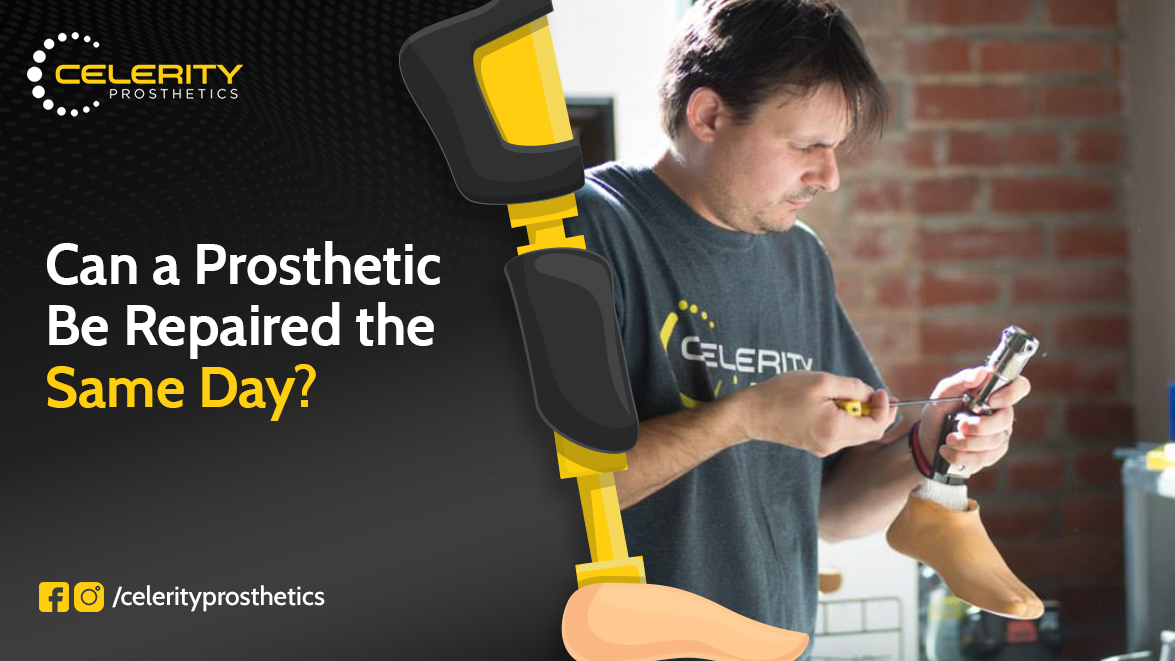
Yes, a prosthetic can often be repaired the same day depending on what broke and what parts your clinic has ready to go. Simple fixes like changing a worn out foot shell, tightening loose bolts, or adding extra padding inside your socket can easily be done in a couple of hours. However, if your hard carbon shell cracks in half or your high tech electronic knee stops working, you will have to leave it with your team for a few days while they rebuild the frame or send it out to the manufacturer.
Knowing how prosthetic repairs work behind the scenes helps you handle unexpected equipment hiccups without losing your peace of mind.
Quick Answer
Yes, many prosthetic repairs can be done on the same day. Quick fixes like replacing worn foot covers, tightening loose alignment screws, replacing worn straps, or adjusting socket padding take just a couple of hours. But if you have a cracked socket, a broken electronic joint, or need rare parts ordered, the fix will take several days. Calling your clinic early in the morning gives your team the best shot at fixing your device before the day ends.
What Can Often Be Repaired Same Day
Lots of small, daily wear problems are pretty simple to fix if your clinical team has the right tools and extra parts sitting on their shelves. Learn more about prosthetic limb maintenance tips to keep your device in good working condition.
1. Replacing Worn Foot Shells and Tread Covers
The rubbery foot shell sits on the bottom of your leg to protect the inner foot plate from dirt, water, and pavement grinding. Over time, walking on hard ground wears down the rubber tread or tears the outer plastic. If your clinic has your shoe size and style in stock, a technician can pop off the broken cover, inspect the inside, and snap on a brand new shell before you even finish your coffee.
2. Swapping Mechanical Hardware and Fasteners
Your device relies on heavy duty metal bolts, clamps, and pins to hold everything together smoothly. All the natural vibrations from daily walking can loosen or wear out those small metal pieces over time. If a bolt strips out or a metal plate starts wiggling, your prosthetist can take off the bad hardware, clean up the metal threads, put in fresh bolts, and tighten them down safely while you wait.
3. Replacing Belts, Straps, and Lacing Systems
Straps, Velcro, and twist dials take a beating every single time you put your leg on or take it off. When a cable frays or a main strap tears, your whole setup loses its tight fit. Most offices keep plenty of extra straps and latches around, so a technician can quickly rivet new straps onto your socket or thread a new cable through your dial system in no time.
4. Adjusting Socket Pads and Liner Fit
When your body naturally loses a little weight or fluid, your socket starts to feel loose, which can cause painful slipping and rubbing. Your prosthetist can easily add soft foam pads inside the shell or build up specific pressure spots to cushion your leg. Following a proper prosthetic care routine can also help maintain comfort and fit. These simple padding tweaks take very little time and instantly give you a snug, safe fit so you can walk out the door comfortably.
5. Swapping Standard Modular Components
Modern lower extremity prosthetics use modular connector pieces that let parts unbolt easily when needed. If a basic mechanical joint or connecting metal tube gets damaged, your prosthetist can unscrew the broken piece and bolt on a fresh replacement right away. As long as the office has that matching modular piece in their storage room, swapping it out takes less than two hours.
6. Replacing Pin Lock Latches and Push Buttons
Pin lock systems use a small internal catch mechanism to grip the pin at the bottom of your gel liner. If that release button sticks or the internal catch stops holding tight, putting on your leg becomes frustrating or downright unsafe. Technicians can unscrew the lock housing from the bottom of your socket, put in fresh internal springs, and make sure it clicks safely before sending you home.
What Usually Takes Longer (More Than One Day)
Major structural cracks and delicate computer parts simply cannot be rushed. Some failures require total remakes or factory attention that naturally adds extra time to the clock.
1. Fixing Cracked Hard Socket Shells
Your main socket carries your full body weight with every single step you take. If the hard plastic or carbon fiber wall cracks, the whole leg becomes unsafe to walk on. Slapping a piece of tape or glue on a crack is just a temporary patch and will not hold up. Building a whole new custom socket means taking a new mold of your limb, shaping the plaster, laying up fresh materials, and letting everything cure completely, which takes a few days.
2. Servicing Microprocessor Knees and Bionic Joints
High tech electronic knees and ankles are packed with sensitive computer chips, sensors, and fluid valves. When a bionic joint glitches or leaks oil, local clinic technicians are not allowed to open up the sealed cover without ruining your warranty. The unit has to be packed up carefully and shipped straight back to the main factory for official repairs, which usually takes a week or two.
3. Ordering Rare or Custom Replacement Parts
Even though offices try to keep plenty of standard parts on hand, they cannot store every single size and custom design ever made. If your leg uses a rare attachment, an older out of print model, or a specialized pediatric part, your team has to order it directly from the manufacturer. Even with fast shipping, you still have to wait for the delivery truck to arrive before your repair can start.
4. Rebuilding Full Cosmetic Covers and Realistics
Custom foam or silicone covers are built to match the soft shape, look, and skin tone of your other leg. Repairing a torn or faded cosmetic skin is a slow, careful project. Technicians have to shape new foam layers by hand, apply special glues, and let protective coatings dry slowly, which means same day turnarounds just are not possible for full cosmetic work.
5. Overhauling Severely Damaged Frame Structures
If you take a hard fall or get into a car accident, multiple parts of your device can bend or break all at once. Checking the whole frame, hunting for tiny hidden cracks, replacing several bent metal connectors, and completely realigningre aligning your walking balance takes hours of workbench labor. Your prosthetist will need a few extra days to make sure the rebuilt leg is completely safe for you to use.
Factors That Affect Prosthetic Repair Timelines
How fast your device gets fixed usually comes down to a few practical details working behind the scenes. Keep these things in mind when you give your clinic a call.
- In- clinic inventory levels: Regular prosthetic care and maintenance can also help identify worn components before they require major repairs.
- On- site lab capabilities: Offices that have a full workshop right down the hall can cut, grind, and adjust metal and plastic much faster than clinics that have to mail their technical work out to a central building.
- Prior authorization and insurance rules: Some insurance plans demand paperwork and formal approval before a team can replace big parts or start major rebuilds, and waiting on that paperwork often takes longer than the actual hands on repair work.
- Scheduling and technician availability: Emergency bench work takes dedicated time out of a technician’s day, so calling your office early in the morning helps the team squeeze your broken part onto the workshop schedule.
- The age and model of your device: Older leg designs often use hard to find hardware that suppliers do not make in bulk anymore, which leads to longer wait times whenever a piece wears down.
Conclusion
Dealing with a broken leg or arm can completely throw off your afternoon, but plenty of daily wear problems can be solved in a single visit with the right care. From popping on a new tread cover to tightening up loose frame bolts, quick turnarounds happen all the time when you catch minor wear early on. Knowing which prosthetic repairs can be finished on the same day helps you stay calm and roll with the punches whenever your gear needs a quick tune up.
If your device feels wobbly, makes strange clicking sounds, or needs a quick fitting adjustment, do not sit around and wait for the issue to get worse. The helpful team over at Celerity Prosthetics is always ready to look over your gear, handle fast maintenance, and get you back on your feet safely. Call your prosthetist today to set up a checkup or repair appointment!