
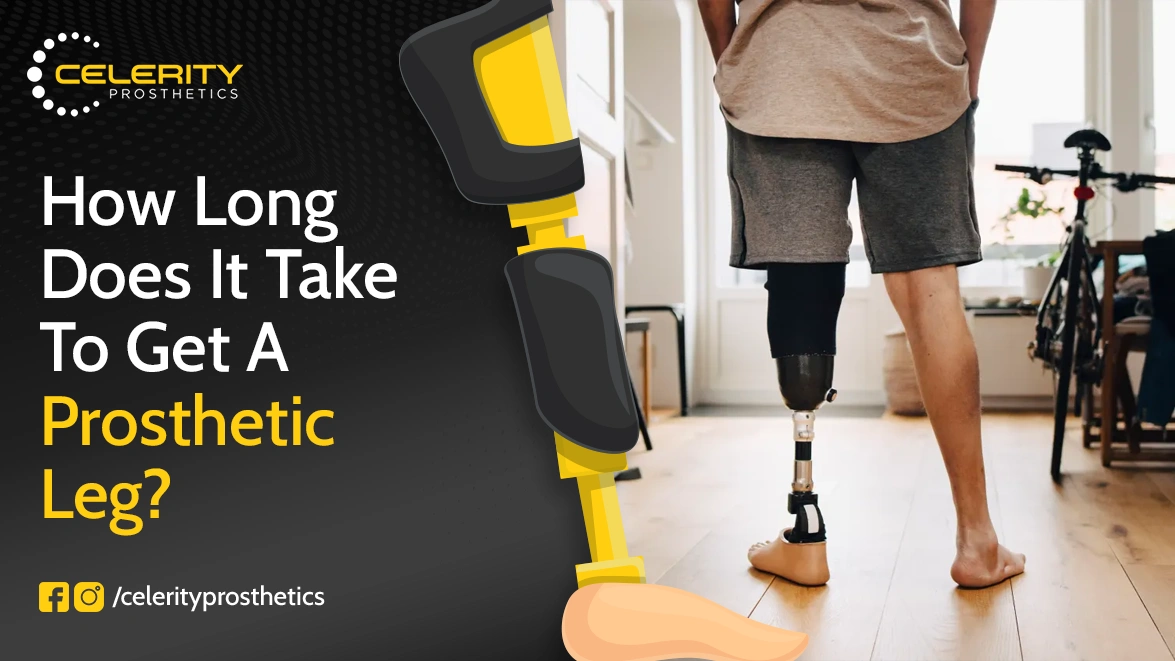
The process of getting a prosthetic leg varies from person to person, but on average, it takes about six to twelve weeks. However, this timeline may vary depending on individual circumstances. Some people begin walking sooner, while for others, the journey may take a few months longer. This is part of what you should know before getting a prosthetic leg.
It’s not just a “fit and done” kind of thing. There’s swelling to deal with, skin to protect, muscles to wake up again. And every step, from the first fitting to the first confident walk, builds on the one before it.
That’s why no two timelines look the same. But once it starts moving, it moves fast. Suddenly, you’re no longer thinking about recovery; you’re just thinking about walking again.
The Timeline for Getting Your First Prosthetic Leg
Recovery sets the pace for everything that follows.
1. The Healing Period
The first few weeks are quiet. Doctors focus on pain, swelling, and wound care. You’ll probably use wraps or compression socks to help shape the limb. It feels slow at first; you just want to move, but this part sets the stage for everything that follows. Most people spend four to six weeks here before any fitting begins.
2. The Temporary Prosthesis
When the swelling settles and healing is stable, some patients begin using a temporary prosthetic leg. This one isn’t the final version. Think of it as practice, a way for your body to learn balance again. It helps you get used to the feeling of standing and taking steps with support.
3. The Custom Prosthetic
After about eight to twelve weeks, you’re ready for the permanent custom leg. Measurements, molds, fittings: it’s all done carefully so the prosthesis fits your body perfectly. You’ll probably come in a few times to make small changes until it feels right. That’s normal. A few millimeters can make all the difference between comfort and frustration.
4. The Training and Therapy Stage
Once your prosthetic fits, the real work begins. You start therapy, learning how to walk again. It’s strange at first as your balance shifts, your stride changes. But little by little, your muscles remember what to do. Some people get there in weeks, others take a few months. The point isn’t speed. It’s comfort, control, and confidence.
Many people end up walking comfortably within six to twelve weeks, and others take up to six months for everything to feel natural. It’s progress you can actually feel week by week.
What Affects How Long It Takes
Every person heals differently, and a few things can stretch or shorten the timeline.
- Healing Speed: If the incision heals smoothly and the swelling fades quickly, you’ll move on to fittings sooner. If your skin takes longer to close or your tissue stays tender, things pause until your body’s ready.
- Type of Amputation: Below-knee prosthetics usually come together faster because the knee joint is still there for balance. Above-knee ones take longer since they rely more on technology and training.
- Limb Shape and Skin Health: A smooth, round limb makes the socket fitting simpler. If there are uneven spots or lingering swelling, extra adjustments happen until everything sits right.
- Prosthetic Type: Some legs are simple and ready in weeks. Others, like microprocessor knees or athletic builds, need more testing to sync with your body’s motion.
- Therapy Routine: The more consistently you show up for therapy, the faster your body adapts. It’s about repetition and muscle memory. Skipping sessions slows everything down.
- Overall Health: Conditions such as diabetes, infections, or poor circulation can delay recovery. Eating well, resting properly, and following your care plan make a bigger difference than most people realize.
Adjusting to Life Again
Once the fit feels right and therapy starts working, your days begin to change. You stop counting weeks. You stand taller, move more easily, and the prosthetic stops feeling like a piece of equipment. It starts feeling like yours.
It’s strange how quickly it becomes normal. The fear goes quiet. The confidence sneaks in. One morning, you just get up, stand, and walk, no thinking, no planning. Just living again.
Conclusion
Most people start walking with a prosthetic leg within six to twelve weeks. For others, it takes closer to six months before every step feels right. Healing speed, therapy, prosthetic type, and overall health all play a part. There’s no shortcut through it. You go step by step, healing, fitting, adjusting, and training, until your balance returns and walking feels natural again.
At Celerity Prosthetics, we guide you through every one of those steps. Our team works alongside you, helping your body adjust, fine-tuning your fit, and making sure comfort always comes first. We take time where it’s needed, move steadily when it’s right, and celebrate the small victories that lead to big ones. You don’t just get a leg here: you get your stride back, at your own pace.