
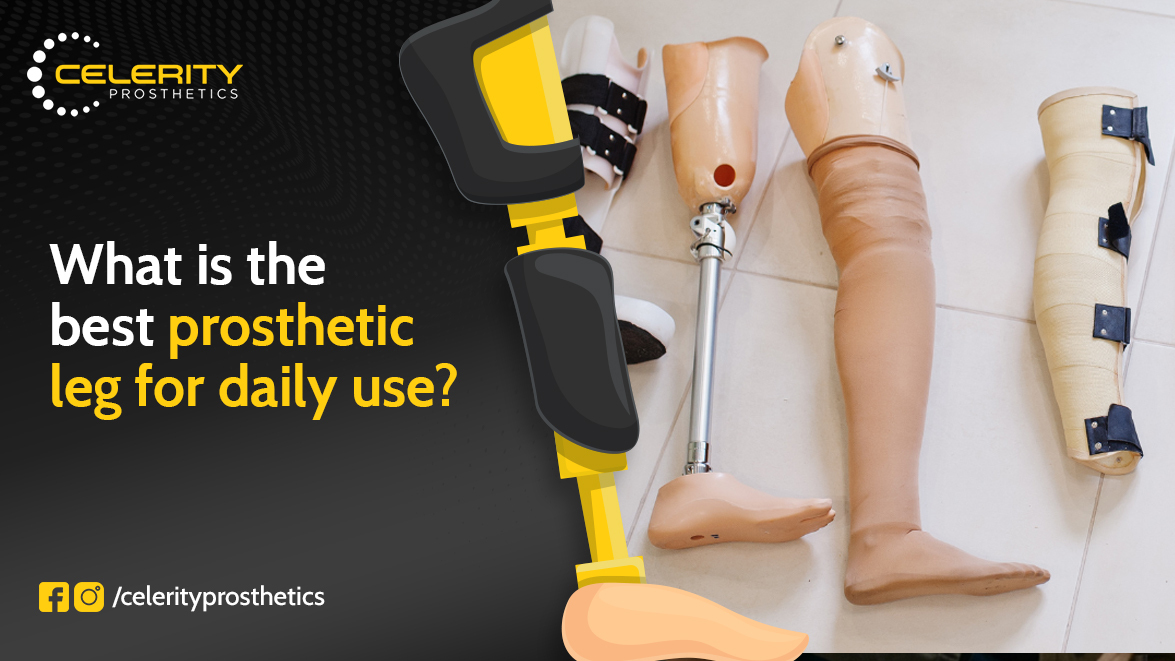
Picking the right prosthetic leg for daily use is harder than most people expect. There are different types, different parts and different activity levels that all factor in. The best prosthetic leg for daily use depends on your amputation level, activity level (K1–K4), and socket fit. Most users benefit from a well-fitted socket paired with a lightweight carbon fiber energy-return foot. Whereas above-knee amputees typically achieve the best results with a microprocessor knee system.
Core Takeaways
- Prosthetic choice is driven by amputation level, K-level (K1–K4), and socket fit, not cost or brand.
- Socket fit is the performance anchor; everything else is secondary if alignment is off.
- Below-knee and above-knee systems differ fundamentally, especially in knee control and gait mechanics.
- Energy-return carbon fiber feet and microprocessor knees improve efficiency and stability for higher-mobility users.
- Accurate activity reporting ensures correct prescription and better long-term usability.
- Understanding basic component categories improves clinical decision-making and consultation outcomes.
What Makes a Prosthetic Leg Good for Daily Use?
A good daily-use prosthetic comes down to a few things that matter more than price or brand.
- Socket fit is everything. A poorly fitting socket makes the rest of the day uncomfortable regardless of the components attached to it.
- Durability matters. Daily use means stairs, uneven ground and hours of consistent wear. Components need to handle that without breaking down.
- Weight adds up over a full day. Lighter materials like carbon fiber reduce fatigue significantly compared to older heavier options.
- Activity match is key. The prosthetic needs to suit what you actually do daily.
- Anyone exploring prosthetic Oklahoma options should have a clear conversation with their prosthetist about activity level before any component decisions are made.
Types of Prosthetic Legs Available
The type of prosthetic that works for you depends entirely on where the amputation happened. Here is what each level actually means for your options.
Below Knee Prosthetics
The knee is still there, so control comes naturally. Below-knee prosthetics replace the foot and ankle only. Most people with this level of amputation pick things up faster and get comfortable with daily use quicker than those with higher amputations.
Above Knee Prosthetics
Both the knee and the foot need to be replaced here. That means more components and a longer learning curve. The knee component choice becomes the most important decision because it directly affects how safely and naturally walking happens day to day.
Knee Disarticulation Prosthetics
The amputation goes through the knee joint itself. The residual limb is longer than a standard above-knee situation which gives better leverage and control. A specialized knee unit is used here rather than standard above-knee components.
How Amputation Level Determines Options
A below-knee user and an above-knee user are simply not choosing from the same list. Your prosthetist works within what actually applies to your level. Knowing which category you fall into before your appointment helps you ask better questions and understand what the component differences actually mean for your daily life. Getting prosthetic treatment matched correctly to your amputation level from the start saves a lot of back and forth later.
Key Features to Look for in a Daily Use Prosthetic
The features listed below actually determine how well a prosthetic holds up through a full day of real use.
Socket fit and suspension system
Socket fit and suspension system come before everything else. The socket is what connects the prosthetic to your body and if that connection is not right nothing else works the way it should. A well-fitted socket with a reliable suspension system stays in place, reduces skin irritation and makes the whole device easier to control.
Foot and ankle component options
Foot and ankle components vary a lot in how they respond to movement. A basic foot works for low activity use but someone who moves around on different surfaces all day needs a dynamic response foot that returns energy with each step rather than just absorbing it.
Knee joint options for above-knee users
Knee joint options for above-knee users are one of the most significant decisions in the whole process. A mechanical knee costs less but requires more conscious effort to control. A microprocessor knee reads movement in real time and adjusts automatically which makes walking on uneven ground and stairs significantly safer and more natural.
Weight and material considerations
Weight and material affect how tired you get over a full day. Carbon fiber components are lighter and stronger than older materials. That difference feels minor at first and becomes very noticeable by the end of a long day on your feet.
How Activity Level Affects Prosthetic Choice
Activity level is one of the main factors that determines what gets prescribed. Medicare uses a K-level classification system that most insurers follow and it shapes which components are approved for each person.
K1 and K2 Activity Levels
K1 covers people who walk on flat surfaces at a slow, consistent pace and do not need to handle much variation in terrain. K2 adds the ability to handle low-level environmental challenges like curbs and uneven ground. Both levels typically get prescribed simpler components that match the lower demand being placed on the prosthetic daily.
K3 and K4 for More Active Users
K3 is where most working-age active adults fall. It covers people who walk at varying speeds, handle most surfaces and can use a prosthetic beyond basic mobility. K4 covers high-demand users like athletes and people in physically demanding jobs. Higher K levels open up access to more advanced components including microprocessor knees and high-performance carbon fiber feet.
Matching the Prosthetic to What You Actually Do Daily
Be honest with your prosthetist about your real daily life. Not the version that sounds good but what a typical day actually looks like. Underreporting your activity level leads to a prosthetic that holds you back. Overreporting leads to components that are harder to control safely. The right match comes from an accurate picture of how you actually move through your day. Anyone working with prosthetic Oklahoma City providers should have this conversation clearly before any prescription gets finalized.
Most Recommended Prosthetic Leg Components for Daily Use
Ask most prosthetists what makes a daily-use setup actually work and these are the components that keep coming up.
- Carbon fiber feet are lighter than older options and push back with each step instead of just absorbing the impact. By the end of a long day, that difference is real.
- Microprocessor knees are a game-changer for above-knee users. The knee reads what you are doing and adjusts on its own. Going downstairs or walking on grass stops being something you have to think hard about.
- Waterproof parts are worth it if you want to shower without taking the leg off or move through wet conditions without worrying about damage.
- A good liner and suspension setup keeps the socket from moving around during the day. Skin stays in better shape and the whole device feels more connected to your body.
Conclusion
Selecting a prosthetic leg for daily use is ultimately a systems decision, not a product decision. When socket fit, activity level, and component configuration are properly aligned, mobility becomes more efficient, stable, and sustainable across everyday environments.
There is no universal “best” option. Only the best configuration for how you actually move. The most effective outcomes come from accurate activity assessment, clear clinical communication and iterative fitting adjustments over time.
Celerity Prosthetics helps people work through exactly that. Reach out and have a proper conversation about what works for your life.
Read Also: What should I expect at my first prosthetic clinic appointment?
FAQs
How long does a prosthetic leg last with daily use?
Roughly three to five years for most components. The socket tends to need attention earlier because the shape of the residual limb shifts over time.
Can I shower or swim with a prosthetic leg?
Not with a standard one. Waterproof versions exist for exactly that purpose so bring it up with your prosthetist if water activity is part of your routine.
How do I know if my prosthetic leg fits correctly?
It should feel stable when you move and should not leave your skin sore or raw where the socket sits. Slipping, pain or skin breakdown means something needs to be looked at.