
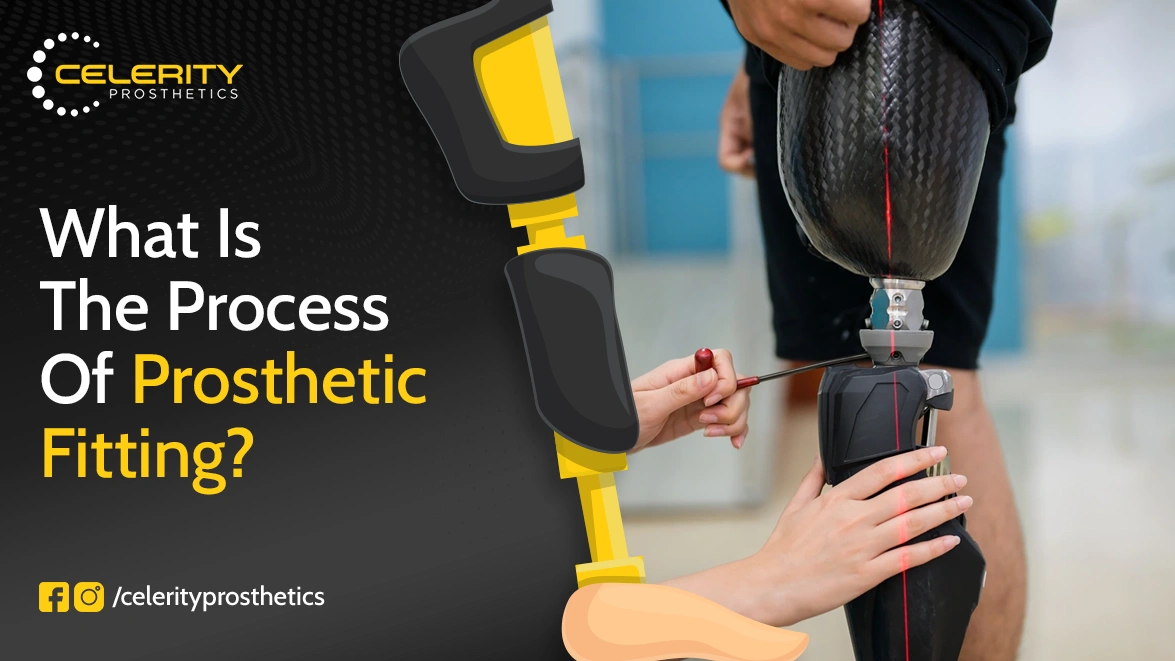
Losing a limb or facing the need for a prosthesis can feel overwhelming. Many people wonder how a prosthetic limb goes from concept to comfortable, functional use. The process of prosthetic fitting transforms that uncertainty into a step-by-step journey.
The process begins with evaluating your residual limb and overall health, as well as discussing lifestyle and mobility goals. A custom design is created, with a cast or scan made into a test socket. Once fitted and adjusted, you receive training and rehabilitation, followed by ongoing care, maintenance, and emotional support to help you adapt to your new prosthetic.
Key Steps of Prosthetic Fitting Procedure
Here is a breakdown of all the key steps that ensure smooth fitting of the prosthesis:
1. Initial Consultation and Evaluation
First, you meet a professional prosthetic team. They will examine your medical history and assess the shape and condition of your residual limb, including skin condition, muscle tone, scars, and sensation, to determine which factors may be contributing to discomfort or poor fit.
During the consultation, you can discuss how you live and what you want to do. Is it to go about walking, playing sports, returning to work, or carrying out normal daily activities? Can you drive with a prosthetic leg or arm? All that helps shape the plan.
2. Custom Prosthetic Design and Fabrication Planning
Once they know your needs and situation, the real design process begins. Your prosthetist will help determine the type of socket, the type of joints, and the components for your foot or hand, as well as how you will use them, whether for an arm or leg. To capture the exact shape and contours of the atypical, residual limb, they may place a cast in plaster or do a 3D scan of the remaining limb.
Based on the mold, a diagnostic socket, also known as a test socket, is formed to resemble the ultimate prosthesis fit. They plan the materials and the timeline, as well as any touches of style, such as a realistic cosmetic covering or a hand-like shape of a limb beneath clothes, at this stage.
3. Fitting and Adjustments (Test Socket Stage)
The test socket is where you try your prosthetic. It’s often made of clear plastic, allowing the prosthetist to see exactly how your residual limb fits inside. You’ll try it on, stand, maybe walk (if it’s a leg), or move the arm if it’s an upper‑limb prosthesis.
The prosthetist watches for pressure points, comfort, proper alignment, stable suspension, and how well components fit together. Often, the first socket won’t be perfect. You may need several fitting sessions. Each time, adjustments are made – reshaping, changing liners, or altering suspension methods – until the socket feels secure, comfortable, and functional.
4. Final Prosthesis Assembly and Delivery
When the test socket fits right, the final prosthesis is built. That includes:
- The definitive socket (often made from stronger materials, such as carbon fiber or resin)
- The suspension system or liner, and joints if needed
- The terminal device — such as a foot, hand, or other appendage.
Then, your prosthetist aligns everything: first, static alignment (standing or sitting), and then dynamic alignment (walking, performing everyday movements) to match your body’s natural mechanics.
If you want a more natural look, there’s also cosmetic finishing available, perhaps a covering that provides a lifelike shape or texture, helping the prosthesis feel more like “you” rather than a device.
5. Training, Rehabilitation, and Adaptation
When you have procured the prosthesis, you have to learn to use it. This is typically achieved through gait training, mobility and strength training, and posture correction, particularly in cases involving leg prostheses. It may also involve the use of walking aids during the initial part of the rehabilitation process.
With an arm or hand prosthesis, you will practice holding things, which will help you with your daily practice and improve coordination and control. In this case, it is worth noting that it is tied to either physical therapy or occupational therapy.
The lessons on how to place (wear) the prosthesis and remove it (doff), as well as care of the limb, hygiene, and liners or suspension systems, will also be offered individually. When they are done successfully, they eliminate skin complications and make the prosthesis comfortable in the long term.
6. Ongoing Support, Maintenance, and Adjustment
The journey doesn’t end with delivery. Over time, your residual limb may change in shape or volume, especially in the first year after amputation. That can affect socket fit and comfort. Components such as liners, padding, suspension systems, and joints may wear out or shift over time.
Routine maintenance, cleaning, and periodic check-ups are crucial to ensure everything functions properly. If your lifestyle or activity level changes, or if your body changes (such as weight or muscle tone), you may need to refit or even replace parts to maintain comfort and function.
7. Psychological and Social Support
Finally, living with a prosthesis is not just about mechanics and therapy. Emotional adjustment is significant. The support of therapists, your peers, family, or support groups can help you adjust, restore your confidence, and feel like yourself once more.
Most prosthetic clinics are committed to the holistic approach, whereby users are not just moving but also living well. Rehabilitation is not just about walking or holding a hand, but rather about returning to everyday life: work, hobbies, family, and social activities. It is that social side that counts a lot.
Conclusion
The process of prosthetic fitting moves through several careful stages that work together to support comfort, function, and long-term use. It begins with an in-depth consultation to assess the individual’s goals, health, and limb quality. A personalized design and plan are then created based on their specific needs.
The test socket provides an opportunity to make the fitting adaptable to the professional fit, allowing for later work on the prosthesis, including final assembly, fitting, and education. Follow-up and maintenance are continued to keep it safe and functional. Emotional and social support is provided to help patients feel confident, capable, and mobile once again.
Contact Celerity Prosthetics today to schedule your consultation and see how a custom prosthetic can change your life.