
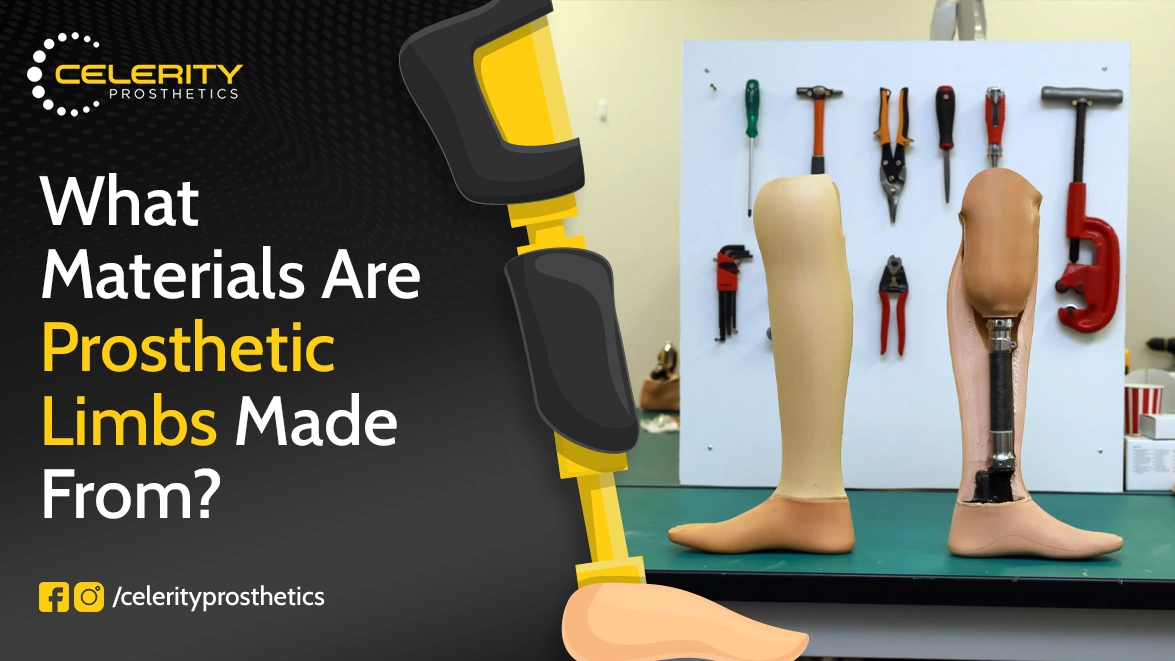
Prosthetic limbs help many people regain mobility, function, and a sense of normalcy. Modern devices use a range of materials. That variety matters: each material brings different strengths. Some make limbs light. Others make them strong. Some add comfort.
So, what materials are prosthetic limbs made from? In modern prosthetics, manufacturers use an array of materials, each chosen for its unique properties. These materials are selected to provide the necessary strength, flexibility, and comfort needed for everyday use. Every type of material used in prosthetic limbs contributes differently to their effectiveness.
Common Materials Used in Prosthetics
The material chosen depends on the kind of prosthesis, how it will be used, and what the wearer needs. Below are the common materials used in prosthetic limbs, benefits, and what each offers.
1. Carbon Fiber
- What it is: Carbon fiber is a very strong and lightweight material. It is produced from very fine carbon threads that are intertwined and solidified.
- How it’s used: The majority of prosthetic legs, particularly those meant for active or sporting persons, incorporate carbon fibers in their making. This is because it suits the type of limbs that have to bend and return to their original shape during walking or running.
- Benefits: Carbon fiber is the material that forms the basis of the strength of prosthetics, but at the same time, it does not contribute to their weight. Also, because of its resistance to wear and tear, limbs with carbon fiber have a longer life span and are still dependable even under heavy use.
2. Titanium
- What it is: Titanium is a metal characterized by its lightness and high strength, among others. Additionally, it is rust-proof and well-behaved in the presence of medical applications.
- How it’s used: Titanium is the mainstay in the prosthetic limbs and arms that are made up of joints, internal supports, and sockets in the most stressed parts.
- Benefits: Titanium provides strength with less weight. Its long-lasting nature and anti-corrosion properties contribute to the reliability of the prosthetic, which is very favorable if the user is active or if the prosthetic is used daily.
3. Plastics (Thermoplastics and Polymers)
- What it is: Various kinds of plastics, particularly thermoplastics, can be processed to create precise shapes through shaping, molding, and heating. Polypropylene, polyethylene, or their analogs are frequently used.
- How it’s used: Plastics comprise most of the socket or the outer coverings, particularly when there is a need for a tailored fit.
- Benefits: Plastic prosthetics are relatively low in price, light, and easy to shape. Also, they are great when it comes to affordability and personalization of prosthetics. The majority of the people using prosthetics made of plastic find them practical.
4. Silicone (and Soft Liners)
- What it is: Soft and rubber-like silicone, or similar materials, are mainly used for prosthesis liners and coverings. These provide a buffer and comfort to the skin.
- How it’s used: As a soft layer inside the socket, it provides comfort and cushion the skin. Silicone is also sometimes used for external covers to simulate human skin by providing a more natural, skin-like look.
- Benefits: Silicone helps to reduce pressure points and friction, thus making the prostheses easy to wear, even for long hours. Moreover, it promotes skin comfort and can prevent irritation.
5. Stainless Steel (and Other Metals / Alloys)
- What it is: Metals such as stainless steel continue to be the most preferred materials in prosthetic components. They provide endurance and support.
- How it’s used: Stainless steel prosthetic limbs are used where physical power and resistance to damage are primarily required, such as in joints, connectors, and structural frames.
- Benefits: Metal parts can provide excellent support, are less prone to damage, and offer prosthetics enhanced strength and durability. It’s great for heavy-duty use.
6. Aluminum (and Lightweight Metal Alloys)
- What it is: Among the various metals, aluminum and its alloys are among the lightest, though they still possess a very good mechanical strength.
- How it’s used: When the weight of the material is one of the main factors in choosing a prosthetic limb that provides great prosthetic frameworks, supports, and structural components, aluminum stands out.
- Benefits: Due to the use of aluminum in the prosthetic parts, it can be worn for longer hours during the day. Aluminum prosthetics remove inconvenience, and the strong material makes the strength of the prosthetic parts better.
7. Composite Materials (Combinations / Reinforced Plastics)
- What it is: There are certain artificial body parts, mainly their connectors (sockets), made of composite materials, which are either plastics or polymers mixed with fibers like carbon or glass fiber.
- How it’s used: It is mainly used in the making of sockets for lower-limb prostheses, where weight, strength, and comfort is under consideration. The use of reinforced plastics provides the same durability as a heavy metal but without the weight.
- Benefits: Composite materials are quite often the same as metals, or very close to them, in terms of strength, but they are still much lighter. They can even sometimes be the reason behind prosthetics being affordable and thus able to be utilized on a large scale.
Conclusion
Prosthetic limbs utilize a combination of materials, including carbon fiber, metals such as titanium or steel, plastics, silicone, composites, and others. Each material has trade‑offs. Some bring strength, others comfort or lightness. Some designs make the prosthetic easy to manufacture, while others make it durable for heavy use.
Understanding the materials used in prosthetics helps individuals make informed decisions. It helps prosthetists design devices that cater to each user’s specific needs. As research continues, newer materials and composites – lighter, stronger, and more affordable – keep emerging. That means prosthetic limbs will only continue to improve in terms of comfort, function, and longevity.
For top-quality and professional prosthetic limbs, you can check out Celerity Prosthetics for all kinds of prosthetics.